

All articles
Building Products / 13 minutes read
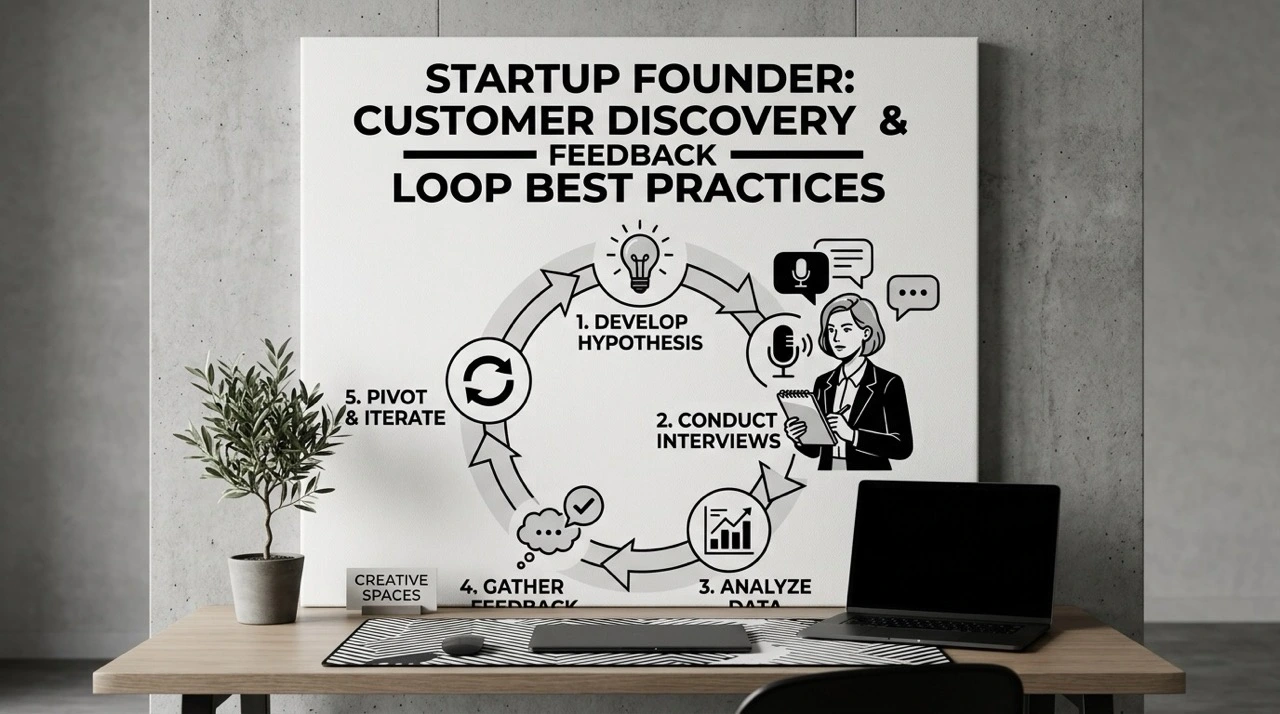
Startup founder customer discovery feedback loop best practices
September 20, 2026
For startups, the hardest part is often not whether you can build the product, but:
Are you building something people actually need?
Large companies can rely on their brand, distribution, and sales teams to create many opportunities for experimentation. But for founders, indie developers, and small SaaS teams, resources are usually limited.
That makes one of the most important things in early-stage product development building a feedback loop that is as short as possible:
Discover a problem → Validate the need → Build quickly → Collect feedback → Make a decision → Iterate
The faster this loop runs, the more opportunities you have to move closer to true Product-Market Fit.
1. Start with the Right Product Idea
1.1. Stop Asking “What Do I Want to Build?” and Start Asking “What Do Customers Need?”
Many startup ideas begin with:
“I have a really cool idea.”
But whether an idea is interesting and whether it solves an important problem are two very different things.
Better questions to ask are:
- Who is currently experiencing this problem?
- How often does the problem occur?
- How are people solving it today?
- What are the obvious weaknesses of existing solutions?
- Would users pay for a better solution?
- Is the problem important enough that users would actively look for a solution?
YC has also emphasized that one of the purposes of an early MVP is to get real users using the product and use their feedback to drive v2, v3, and future iterations.
Customer discovery does not necessarily mean spending several months conducting market research.
In many cases, a more effective approach is:
Build something simple but usable as early as possible, then let real users give you the answer.
1.2. Think About Distribution From Day One
Another question founders often overlook is:
Where will the users come from once the product is built?
Many founders treat product development and distribution as completely separate:
Build the product first → figure out how to get users later.
For a small team, this can be a dangerous sequence.
Even if your product solves a real problem, it is difficult to validate the demand if you have no way to reach potential users.
That's why you should think about potential acquisition channels while choosing the product idea:
- Google / SEO
- X
- Product Hunt
- Hacker News
- Industry communities
- Content marketing
- Cold outreach
- Partnerships
- Open-source projects
- Referrals from existing users
This doesn't mean you need to work on every channel from day one.
Quite the opposite.
You should identify one channel that you can realistically invest in consistently.
For example, if your product naturally matches search intent, SEO may become a long-term acquisition channel. If the product is highly visual or shareable, social media may be a better fit. If you're solving a specific B2B problem, directly reaching potential customers may be more effective than waiting for organic traffic.
Your product determines why someone would use it. Distribution determines whether they can discover it.
1.3. Build a Minimum Viable Product, Not a Complete Product
One of the most common mistakes in early-stage product development is building too many features.
Founders often keep asking:
“What if users also need A, B, and C?”
A product that could have been built in two weeks can easily turn into a project that takes several months.
But the purpose of an MVP is not to prove that you can build a complete product.
Its real purpose is to:
Validate a core hypothesis.
YC's definition of an MVP also emphasizes that it should be a real product, not merely a prototype. It should have a clear purpose, be usable by real people, and provide enough market feedback to determine whether you should iterate or change direction.
A good MVP can be extremely simple:
One user group + one clear problem + one core solution.
Everything else can come later.
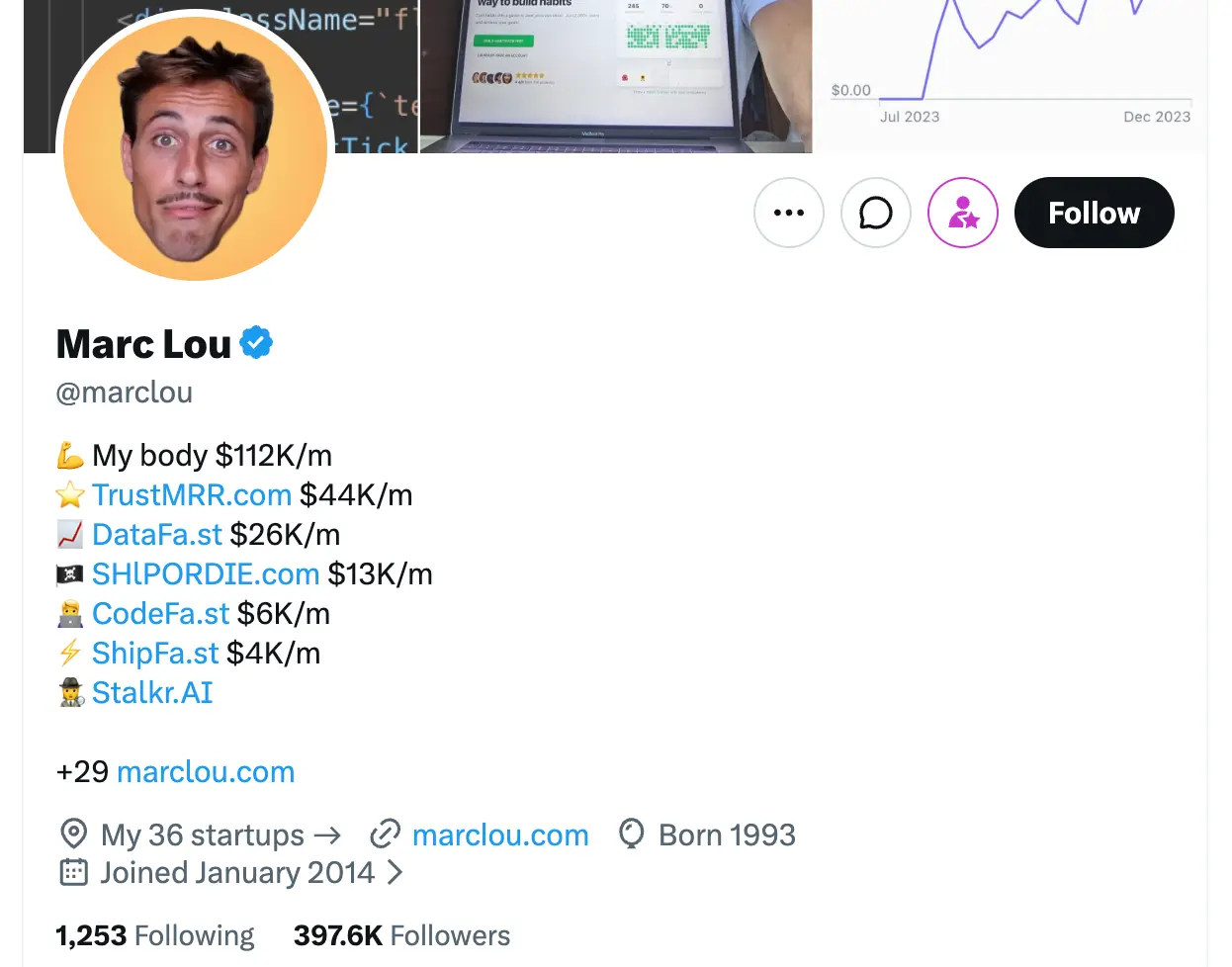
A Typical Example: Marc Lou's TrustMRR
Marc Lou's TrustMRR is a representative example.
In October 2025, Pieter Levels discussed the problem of fake MRR screenshots on X. Marc Lou then came up with the idea of building a platform where founders could verify their revenue through a read-only Stripe API connection.
According to Marc Lou's own account, he built the first version of TrustMRR in a very short period of time.
The initial product was essentially:
- A simple landing page
- Add a startup
- Search for startups
- Display verified Revenue / MRR
The first version didn't even have a sophisticated business model.
He launched it directly and continued adding features and exploring new directions based on user reactions.
The most important lesson isn't that a product can be built in 24 hours.
It's that:
The first version didn't try to solve every problem.
It first tested a very specific question:
Do people care about verified revenue data from startups?
After receiving market feedback, the product continued to evolve in new directions.
That is the core value of an MVP:
It's not about building the final product with the least amount of code. It's about getting the information you need for your next decision at the lowest possible cost.
Today, TrustMRR, which started from this relatively small idea, reportedly has around $44K in MRR.
2. Build a Real Customer Feedback Loop
Once the product is launched, the real work begins.
Many founders collect user feedback, but collecting feedback and building a feedback loop are two different things.
A real feedback loop should look something like this:
User reports a problem → Founder understands the problem → Prioritize it → Product gets developed → User sees the progress → Feature ships → User provides more feedback
And the cycle continues.
2.1. Create Multiple Feedback Channels, but Bring Them Together
Users rarely provide feedback exactly the way you expect them to.
Someone might:
- Send an email
- Leave a message in Discord
- Comment on Reddit
- Send an X DM
- Contact support
- Submit a feature request inside the product
- Leave a review on a product review site
- Tell the founder directly
If all of these conversations remain scattered across different places, two problems quickly appear.
Problem #1: Feedback gets lost
A user may have mentioned a problem several months ago, and eventually nobody remembers it.
Problem #2: It's difficult to identify duplicate requests
User A says:
“I wish you supported X.”
User B says:
“It would be great if you could do Y.”
User C says:
“Right now I have to use Z to solve this problem.”
They may actually be describing the same underlying need.
So the first step in feedback management isn't necessarily adding more feedback channels.
It's:
Bringing feedback from different channels into a unified system.
2.2. Not Every Piece of Feedback Should Become a Feature
This is one of the most important principles of feedback management:
A feature request does not automatically mean you should build the feature.
When a user says:
“Can you add X?”
The real question isn't:
“Should we build X?”
It should be:
“Why does the user need X?”
Users often suggest a solution rather than describing the underlying problem.
For example:
User: “I want an Excel export.”
The actual problem might be:
“I need to send this data to my finance team.”
In that case, an API, automated report, or even an email notification might solve the underlying problem just as well.
When analyzing feedback, it can help to break it into three layers:
Original feedback → Underlying problem → Possible product solutions
This prevents the team from being driven by individual feature requests instead of user problems.
2.3. How Do You Avoid Being Overly Influenced by a Small Number of Users?
This is especially common in small SaaS products.
Imagine you have only 50 active users.
Two of them are extremely engaged and email you every week.
They say:
“This feature is really important.”
As the founder, it's easy to conclude:
“Our users need this feature.”
But what you're actually hearing is the voice of two highly active users.
So feedback shouldn't be evaluated based only on who speaks the loudest.
You should also consider:
- How many users have requested something similar?
- Are they paying customers?
- Does it affect a core use case?
- Does it affect retention?
- Does it affect multiple customers?
- Does it align with the product's long-term positioning?
- How much will it cost to build?
- Is there data showing that the problem actually exists?
You can think of feedback in terms of:
Signal vs. Noise.
But there's an important nuance:
A request from a small number of users doesn't necessarily mean it's unimportant.
If only one customer requests something, but that customer is exactly your ideal customer and the problem directly affects their purchasing decision, that request may be more important than dozens of minor suggestions from other users.
So the goal isn't simply to count votes.
Instead, priority should consider:
Feedback volume + customer value + problem severity + strategic fit + implementation cost
2.4. Show Users What Happened to Their Feedback
Another frequently overlooked part of the feedback loop is:
What happens after a user submits feedback?
One of the most frustrating experiences for users is:
Submit feedback → hear nothing → don't know if anyone saw it → don't know whether it's being considered → eventually forget about it.
A more transparent process might look like:
Submitted → Planned → In Progress → Completed
For example, a user submits:
“I wish you supported Dark Mode.”
The product team reviews the request and tells the user:
Added to the Roadmap.
Development begins:
In Progress.
After launch:
Completed — Dark Mode is now available.
This may seem simple, but it changes the relationship between users and the product.
Users are no longer just:
“people who submit feature requests.”
They can actually see:
how their feedback influences the product.
That creates a positive feedback loop:
User feedback → Product improvement → User sees their feedback being acted on → User becomes more willing to provide feedback.
3. Long-Term Planning: A Roadmap Is Not a Promise List
As your product receives more and more feedback, another problem appears:
What happens if you keep listening to users? Will the product lose its direction?
It can.
If the team simply develops features based on the number of requests, the Roadmap can quickly become:
User A wants XUser B wants YUser C wants ZUser D wants something completely different
Eventually, the product has a little bit of everything but no clear direction.
That's why the purpose of a Roadmap isn't to predict every feature you'll build in the future.
Instead, it acts as:
A bridge between long-term company strategy and real-time customer needs.
3.1. Build a Product Roadmap
A simple Roadmap might include:
- Now: What we're working on
- Next: What we're planning to work on next
- Later: What we may consider in the future
- Ideas: Unvalidated ideas
This helps the team distinguish between:
Things we've decided to build and things users have simply requested.
It's especially important not to put every piece of user feedback directly onto the Roadmap.
Because:
Feedback ≠ Roadmap Item
Feedback should first go through analysis.
Only after it has been validated, grouped, and prioritized should it become part of the product plan.
3.2. Adjust the Roadmap Based on Feedback, But Don't Let Feedback Control It
A good Roadmap should be dynamic.
For example, imagine your original plan is:
Q4: Build A → B → C
After launch, you receive a large amount of feedback about D, and D happens to address a critical problem related to your product's core value.
In that case, the Roadmap should change.
That doesn't mean the original plan failed.
Quite the opposite:
The ability to change your plans based on real customer feedback is itself an important product management capability.
At the same time, you still need strategic constraints.
You can think of product decisions as:
Customer needs × Product strategy × Business value × Technical cost
rather than:
Whoever asks the most gets what they want.
3.3. Build a Continuous Feedback Loop
Once these pieces are connected, startup product development stops looking like:
Think of a feature → Build it → Launch it → Think of the next feature
And starts looking like:
Discover a customer problem
↓
Validate whether the problem is real
↓
Build an MVP
↓
Acquire real users
↓
Collect feedback
↓
Organize, merge, and analyze feedback
↓
Prioritize
↓
Add to the Roadmap
↓
Develop
↓
Launch
↓
Notify users
↓
Collect new feedback
↓
Repeat
This is essentially a continuous Customer Discovery + Product Feedback Loop.
For startups, the speed and quality of this loop can often matter more than creating a detailed five-year product plan from day one.
YC has also consistently emphasized that early-stage founders should keep shipping, talking to users, and iterating based on feedback. This isn't something you only do during the earliest stage of a product. It is an ongoing process.
That's Why I Built Suggix
While building SaaS products myself, I increasingly noticed a problem:
User feedback is easy to generate, but surprisingly difficult to turn into a complete loop.
Users might submit feedback through email, customer support, social media, or directly inside the product.
But what happens afterward is often:
Feedback gets scattered → duplicate requests accumulate → the team struggles to prioritize → the Roadmap becomes disconnected from customer needs → users don't know whether their feedback was ever addressed.
That's why I built Suggix.
The core idea behind Suggix is simple:
Turn user feedback into part of the product development workflow.
Users can submit Feature Requests, Bugs, and other feedback. Teams can organize, categorize, and prioritize that feedback, and then turn it into Tasks.
At that point, feedback is no longer just a message.
It can move through:
Feedback → Task → Roadmap → Development → Changelog → User Notification
This creates a clearer connection between the problem a user reports and the product update that eventually addresses it.
Suggix also supports public Roadmaps, voting, comments, and update notifications, so users can not only tell you what they need, but also see where the product is going.
If you're building a SaaS, indie product, or small startup, you don't necessarily need a complex product management system from day one.
But you can start with a simple question:
What happens to every piece of user feedback from the moment it's submitted to the moment it's resolved?
If that process still depends on Email, Notion, Discord, spreadsheets, and your own memory, it may be time to turn it into a real feedback loop.
Suggestions Drive Fixes. Fixes Drive Growth.
Build what users love, together
Collect feedback, prioritize features, and keep your roadmap aligned with what actually matters.
Get Started — It’s FreeNo credit card required · 14-day free trial · Setup in minutes