

All articles
Building Products / 5 minutes read
Turning User Feedback into the Optimal Product Roadmap
March 3, 2026
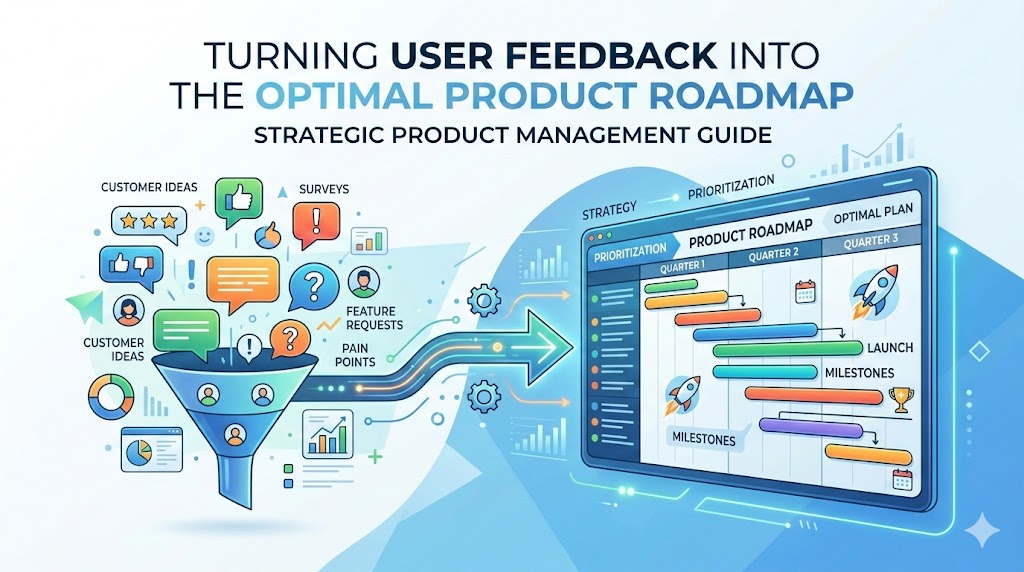
Every product team faces the same challenge: how to decide what to build next. Too often, roadmaps are created based on assumptions, internal opinions, or the loudest voices, rather than what users actually need. This approach leads to wasted effort, missed opportunities, and products that fail to solve real problems. The most effective way to build a product that users love is to turn user feedback into an actionable, prioritized product roadmap. By systematically collecting, analyzing, and acting on feedback, product teams can make smarter decisions, reduce wasted development time, and increase user engagement. In this post, we’ll show how SaaS teams, indie developers, and product managers can use tools like Suggix to create a roadmap driven directly by user needs.
Understanding the Role of User Feedback
User feedback is often the most untapped resource in product development. It comes in many forms: bug reports, feature requests, usability comments, or even casual suggestions. While valuable, raw feedback alone does not translate into a roadmap. Treating every piece of feedback equally or prioritizing the loudest users can mislead teams into building the wrong features.
The key is to treat feedback as structured input. When feedback is collected, categorized, and evaluated systematically, it becomes a reliable guide for product decisions. With the right framework, you can transform scattered user input into a clear roadmap that aligns development with real user needs.
Step 1: Centralize Feedback in One Source of Truth
The first step in creating a feedback-driven roadmap is to centralize all user input. Scattered feedback across email, chat, social media, and forums is hard to track and easy to lose. Centralization ensures that all ideas, complaints, and requests are captured in one place.
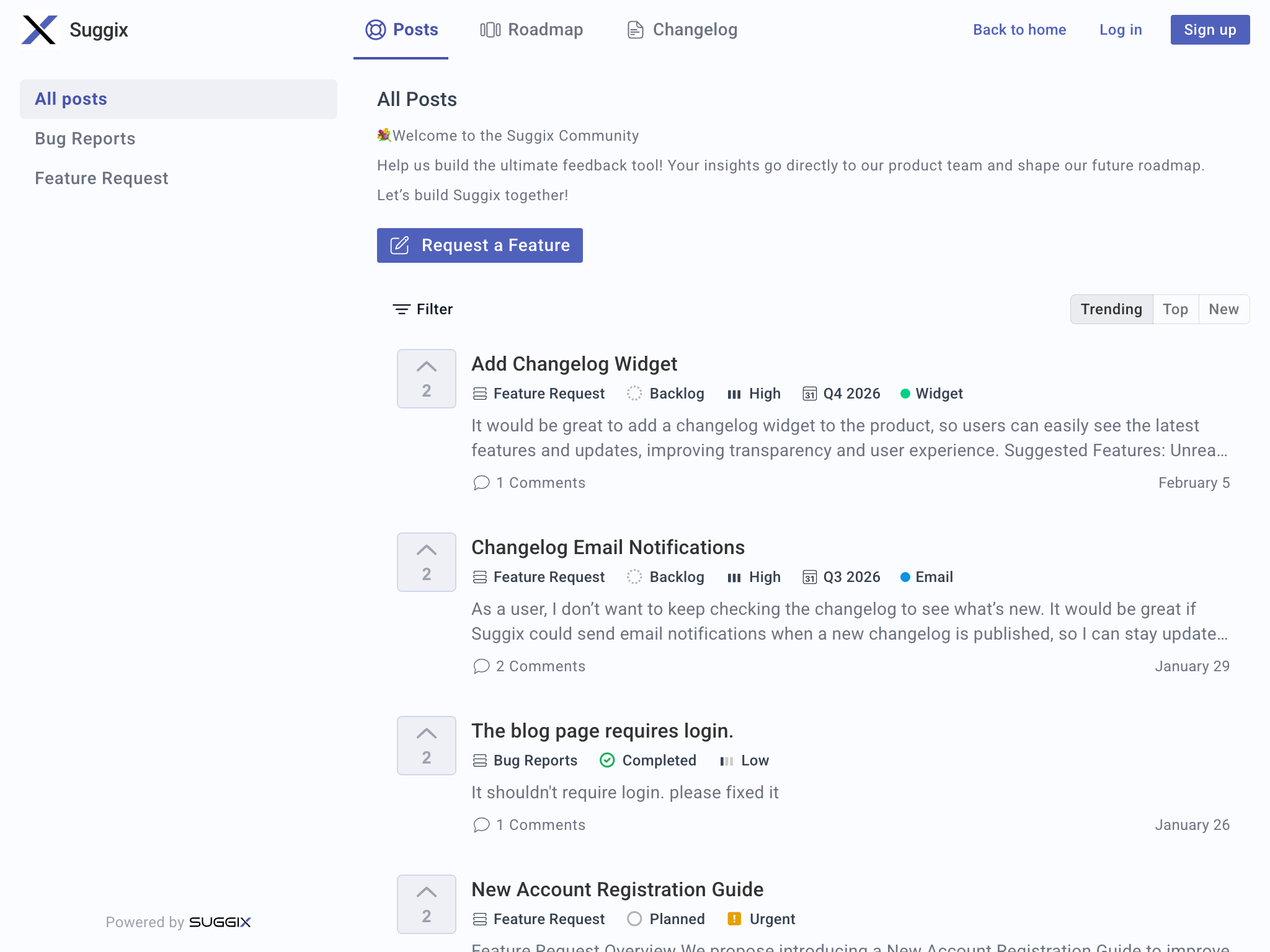
SaaS teams can leverage Suggix to create a single source of truth for all feedback. Users can submit ideas, report issues, and vote on requests directly in the platform. By centralizing feedback, product teams gain a holistic view of what users care about most. This step converts raw feedback into actionable signals, rather than noise.
Step 2: Convert Feedback into Actionable Tasks
Once feedback is centralized, the next step is to translate it into actionable tasks for your team. Feedback rarely comes in a ready-to-implement format; often, it highlights problems rather than concrete solutions. Product teams need to:
- Define the underlying problem, not just the requested feature
- Merge duplicate or similar requests to avoid fragmentation
- Tag tasks by category, effort, and potential impact
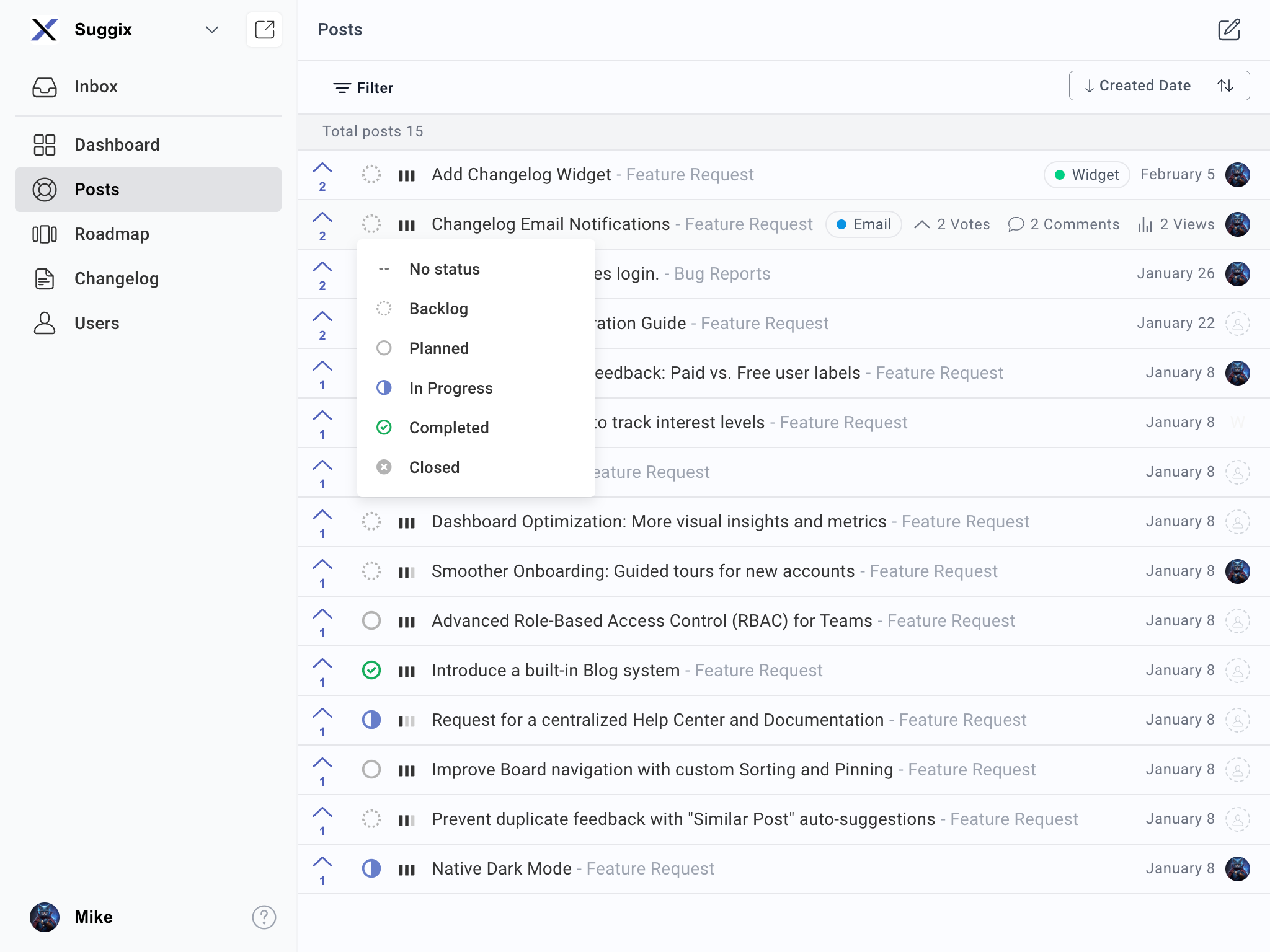
With Suggix, you can easily convert user feedback into tasks that populate your project boards. Each request becomes a manageable unit with context, priority, and voting data attached. This ensures that the development team always knows why a task exists and what problem it solves.
Step 3: Prioritize What Really Matters
Prioritization is the most critical stage in building a roadmap. Without it, teams may spend months developing features that have little impact. Feedback-driven prioritization uses actual user data to guide decisions. Key factors to consider include:
- Number of users affected: Features impacting more users should generally be higher priority
- Business impact: Will this feature drive revenue, retention, or engagement?
- Strategic alignment: Does it support your long-term product vision?
- Development effort: How complex is it to implement relative to its benefit?
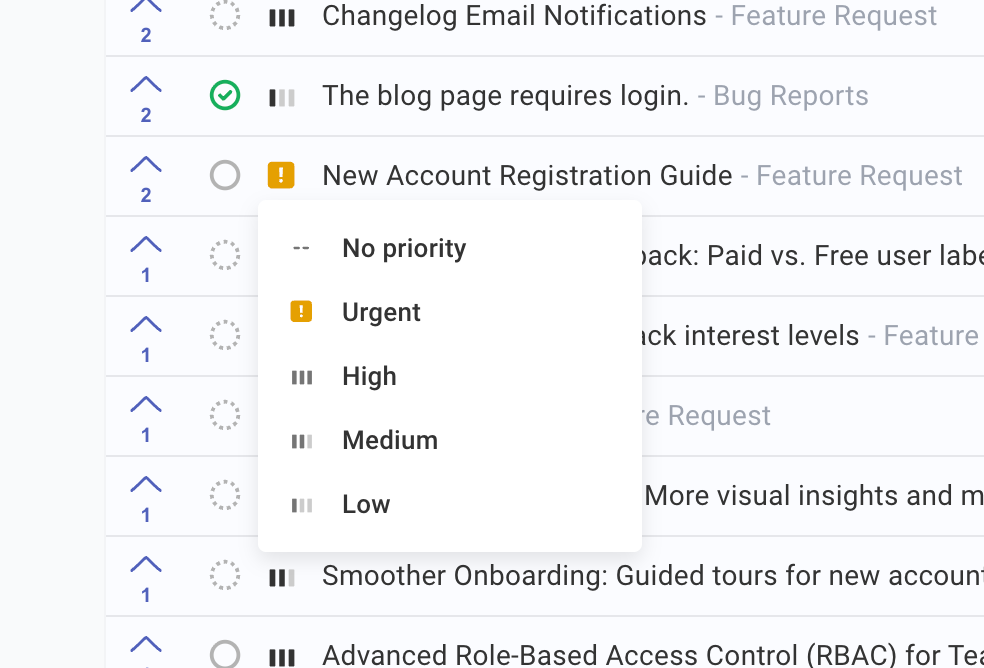
Suggix simplifies this by allowing users to vote and comment on tasks. Votes indicate user demand, while discussions provide context for prioritization decisions. By combining quantitative and qualitative signals, teams can confidently decide what to build first.
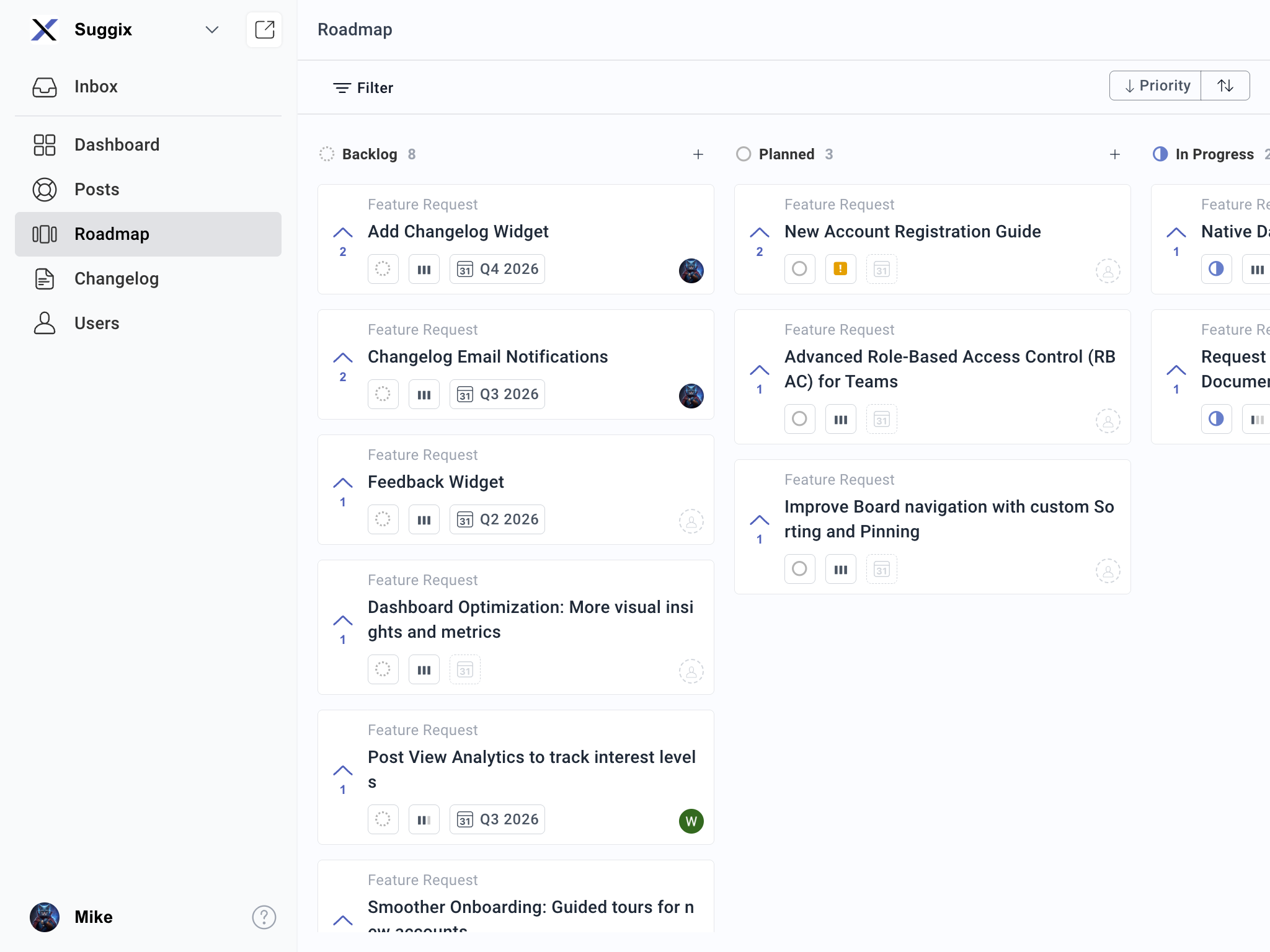
Step 4: Build a Clear Product Roadmap
After prioritization, the actionable tasks are organized into a product roadmap. A roadmap communicates what will be built, when, and why. Effective roadmaps consider:
- Short-term wins: Quick improvements that boost user satisfaction
- Mid-term features: High-impact initiatives that require more development time
- Long-term vision: Strategic bets and innovations that align with the product’s future
With Suggix, teams can link tasks to roadmap stages and keep everything visible in a shared dashboard. Transparency ensures that everyone—from developers to stakeholders—understands the priorities and the reasoning behind them.
Step 5: Close the Loop with Users
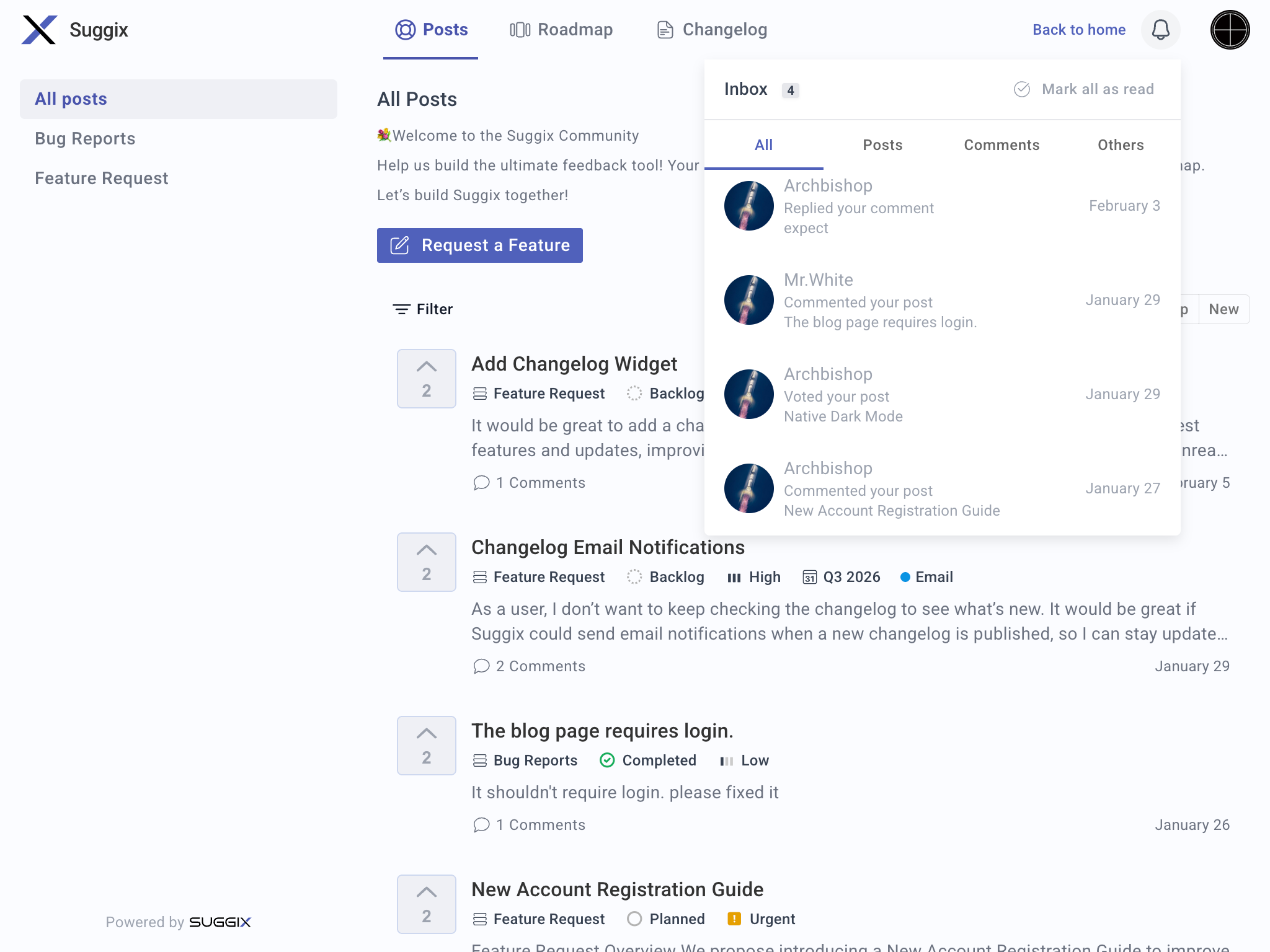
A feedback-driven roadmap doesn’t stop at planning; it requires closing the loop with users. Users should know that their input leads to tangible results. Suggix enables automatic notifications and changelogs, so users see when:
- Feedback is acknowledged
- Tasks are planned or in progress
- Features are released
This transparency builds trust, encourages more feedback, and strengthens user engagement. By consistently acting on user input, teams create a positive feedback cycle: more insights → better roadmap → happier users.
Benefits of a Feedback-Driven Product Roadmap
Implementing a feedback-driven roadmap delivers measurable advantages:
- Fewer wasted features – Development aligns with real user needs
- Stronger alignment – Product, engineering, and business teams work towards shared goals
- Better user retention – Users feel heard and valued
- Data-driven decisions – Prioritization based on actual signals rather than guesswork
Suggix enhances this process by combining collection, task management, prioritization, and communication into a single platform, making it easier for teams to stay aligned and responsive.
Conclusion: Build With Users, Not Just For Them
The future of product development belongs to teams that embrace feedback as the foundation of their roadmap. By systematically collecting, converting, prioritizing, and closing the loop on user feedback, teams can make smarter decisions, ship features that matter, and build products that delight users. Tools like Suggix empower teams to implement this process efficiently, turning user insights into a clear, actionable, and optimized product roadmap.
Remember: A roadmap built on real feedback is not only a plan—it’s a strategy for sustainable growth and user trust. Start listening, start prioritizing, and let your users guide the way.
Build what users love, together
Collect feedback, prioritize features, and keep your roadmap aligned with what actually matters.
Get Started — It’s FreeNo credit card required · 14-day free trial · Setup in minutes