

All articles
Comparisons / 7 minutes read
Best Feedback Tools for Small Businesses in 2026
June 9, 2026

Customer feedback is one of the most valuable assets a growing business can collect. Whether you’re building a SaaS product, an e-commerce store, or a digital service, understanding what customers want helps you prioritize features, reduce churn, and make better product decisions.
The challenge is that many well-known feedback management platforms were built for larger organizations and come with enterprise-level pricing.
For example:
- UserVoice often costs thousands of dollars per year and targets larger product teams.
- Canny is popular among startups but can become expensive as tracked users and advanced features grow.
- Productboard offers powerful product management capabilities but is frequently overkill for smaller teams and uses per-seat pricing that scales quickly.
For many small businesses, indie makers, and early-stage startups, paying hundreds or thousands of dollars per month for feedback software simply isn’t practical.
Fortunately, a new generation of feedback tools has emerged. These platforms focus on affordability, ease of use, and helping small teams collect, prioritize, and act on customer feedback without enterprise complexity.
In this guide, we’ll compare the best feedback tools for small businesses in 2026.
Quick Comparison Table
Tool
Free Plan
Starting Price
Key Features
Suggix
Yes
$29/mo
Feedback boards, roadmap, changelog, team collaboration
UserJot
Yes
$29/mo
Unlimited users, roadmap, changelog, AI categorization
Frill
No
~$25/mo
Feedback boards, roadmaps, changelogs
Sleekplan
Yes
~$13/mo
Feedback portal, roadmap, announcements
Nolt
No
$29/mo
Minimalist voting board, roadmap
Upvoty
No
$15/mo
Feedback boards, roadmap, unlimited users
Usersnap
Yes
€39/mo
Visual feedback, screenshots, surveys
Featurebase
Yes
~$29/mo
AI feedback management, changelog, knowledge base
1. Suggix
Best for: Small SaaS Teams Looking for Simplicity and Value
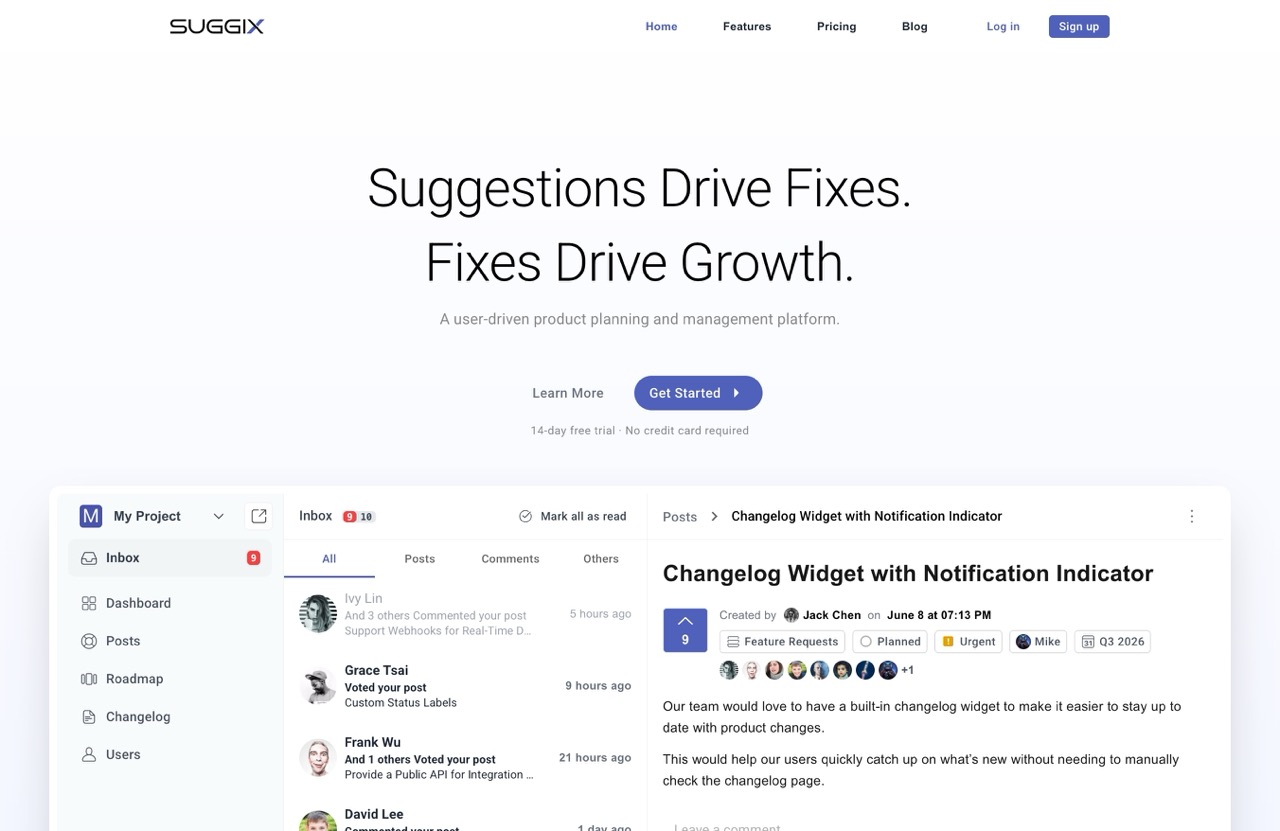
is designed specifically for startups, indie makers, and growing SaaS businesses that need an affordable way to collect and manage customer feedback.
Unlike many competitors that charge per seat or per tracked user, Suggix focuses on predictable pricing and straightforward workflows.
Key Features
- Public feedback boards
- Feature voting
- Product roadmap
- Changelog publishing
- Team collaboration
- Ownership assignment
- Priority management
- Activity tracking
- Custom domains on higher plans
Suggix also includes project management-style collaboration features, allowing teams to assign ownership, track progress, and prioritize requests from a single workspace.
Advantages
- Free plan available
- Affordable fixed pricing
- Unlimited end users
- Clean modern UI
- Easy onboarding
- Built for small teams
Disadvantages
- Smaller ecosystem than Productboard
- Fewer enterprise integrations than larger competitors
Compared with Other Tools
Compared to Productboard, Suggix is dramatically simpler and significantly cheaper for small teams.
Compared to UserJot, Suggix offers stronger internal collaboration and prioritization workflows.
Compared to Usersnap, Suggix focuses more on product feedback management than visual bug reporting.
2. UserJot
Best for: Teams Seeking the Most Generous Free Plan
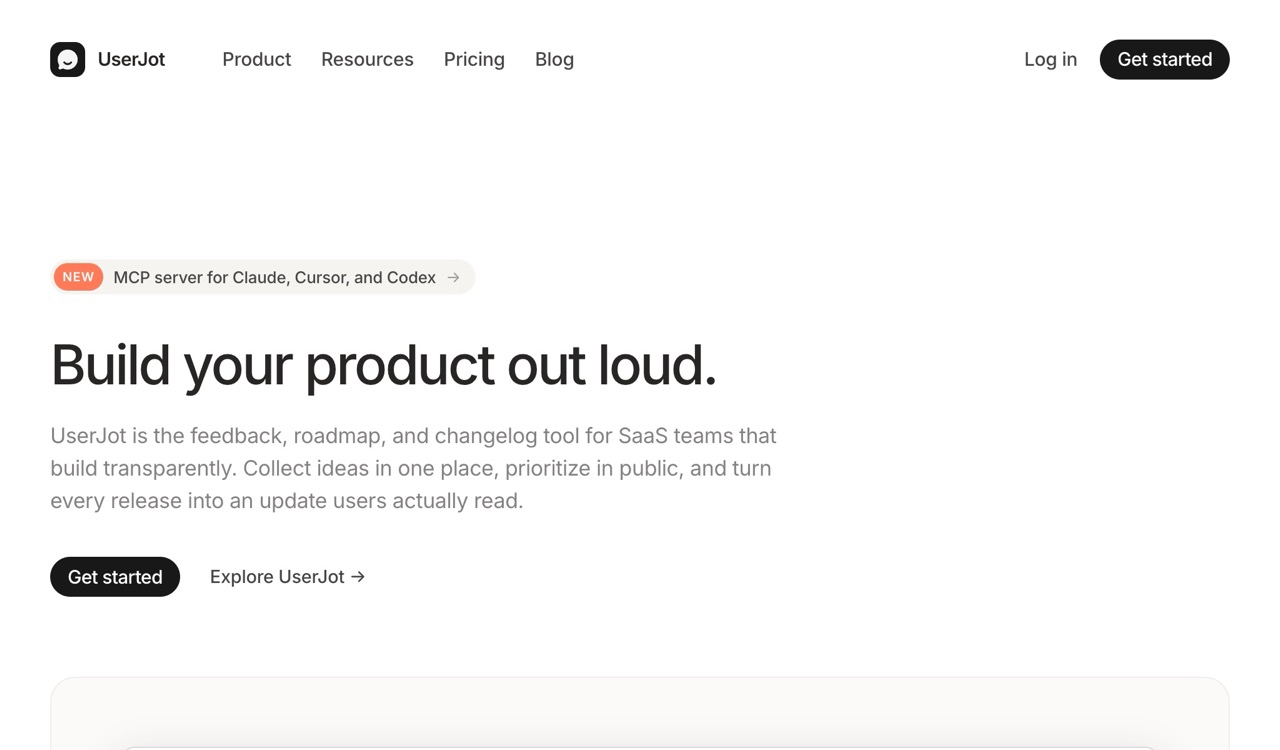
has become one of the fastest-growing feedback platforms among bootstrapped founders.
Its biggest selling point is an unusually generous free plan.
Key Features
- Unlimited users
- Unlimited feedback posts
- Public roadmap
- Public changelog
- AI duplicate detection
- AI categorization
- Feedback widgets
Advantages
- Excellent free plan
- Unlimited users
- AI-powered categorization
- Simple pricing model
Disadvantages
- Limited collaboration features
- Fewer workflow capabilities
- Less mature ecosystem
Compared with Suggix
UserJot wins on free-plan generosity.
Suggix offers stronger project coordination capabilities, better ownership tracking, and more structured prioritization workflows for growing teams.
3. Frill
Best for: Customer-Friendly Product Communication
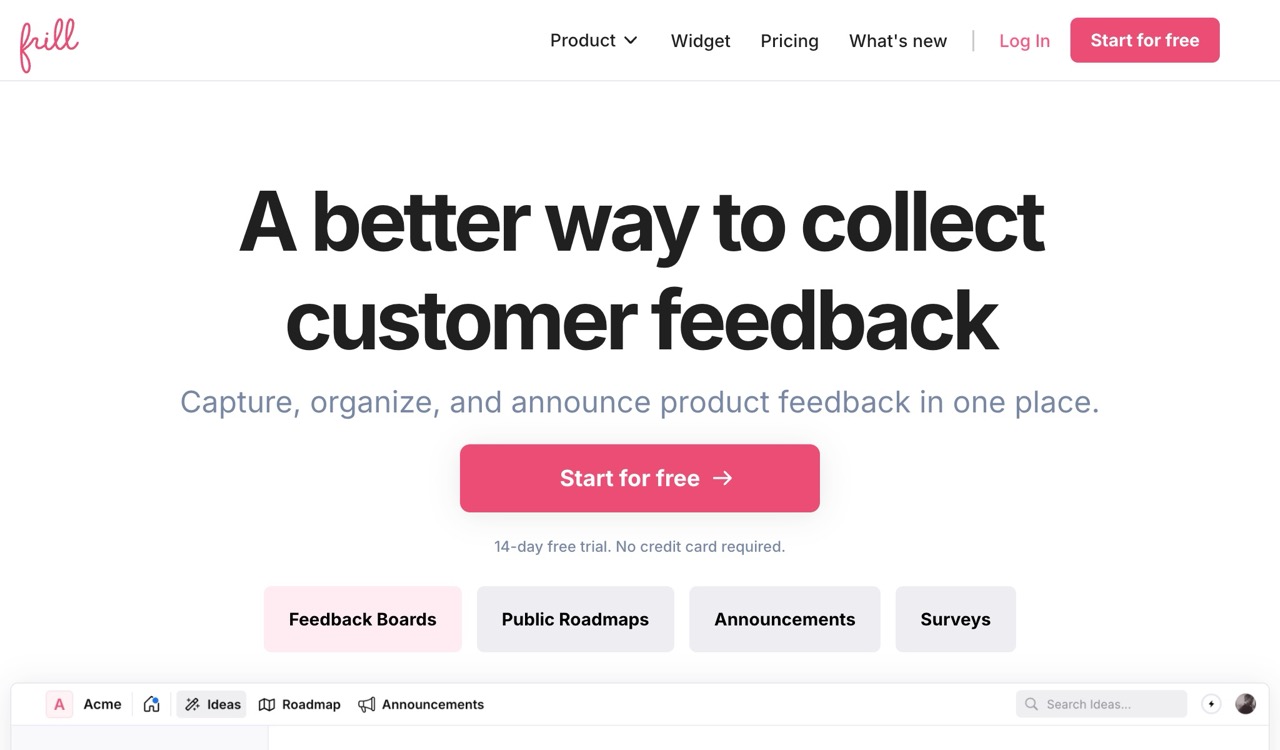
combines feedback collection with changelogs and roadmaps in a polished customer-facing experience.
Many SaaS companies use Frill to maintain transparency with users.
Key Features
- Feedback voting
- Roadmaps
- Changelogs
- Announcements
- Embeddable widgets
Advantages
- Beautiful UI
- Easy for customers
- Strong roadmap presentation
Disadvantages
- No meaningful free plan
- Pricing grows quickly
- Limited prioritization depth
Compared with Suggix
Frill excels in customer-facing presentation.
Suggix provides more operational tools for internal product teams and generally offers better value for startups managing feedback at scale.
4. Sleekplan
Best for: Teams Needing Feedback Plus Customer Communication
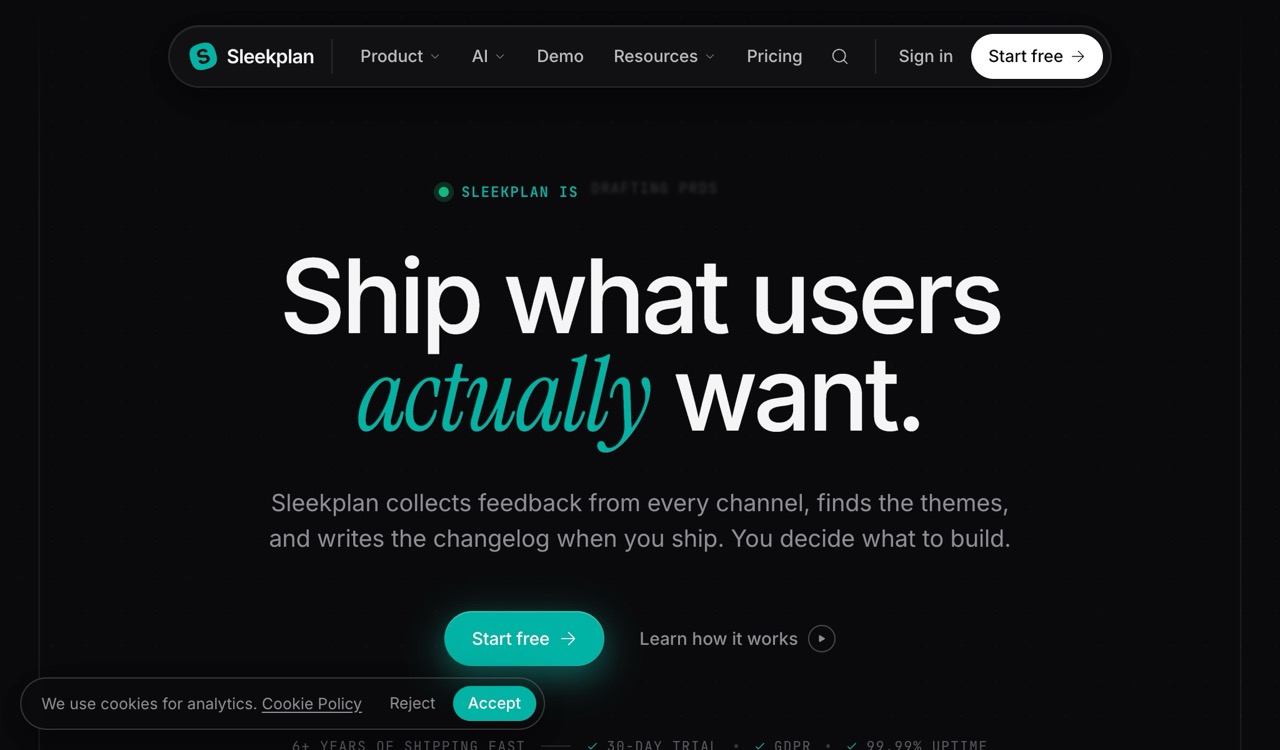
has been around for years and combines feedback boards, roadmaps, and customer communication tools.
Key Features
- Feedback boards
- Public roadmap
- Changelog
- In-app widgets
- Customer portal
Advantages
- Mature platform
- Multiple communication channels
- Reliable feature set
Disadvantages
- More expensive than newer alternatives
- Interface feels dated compared to modern competitors
Compared with Suggix
Sleekplan has a longer track record.
Suggix delivers a more modern user experience and lower entry cost for small businesses.
5. Nolt
Best for: Minimalists
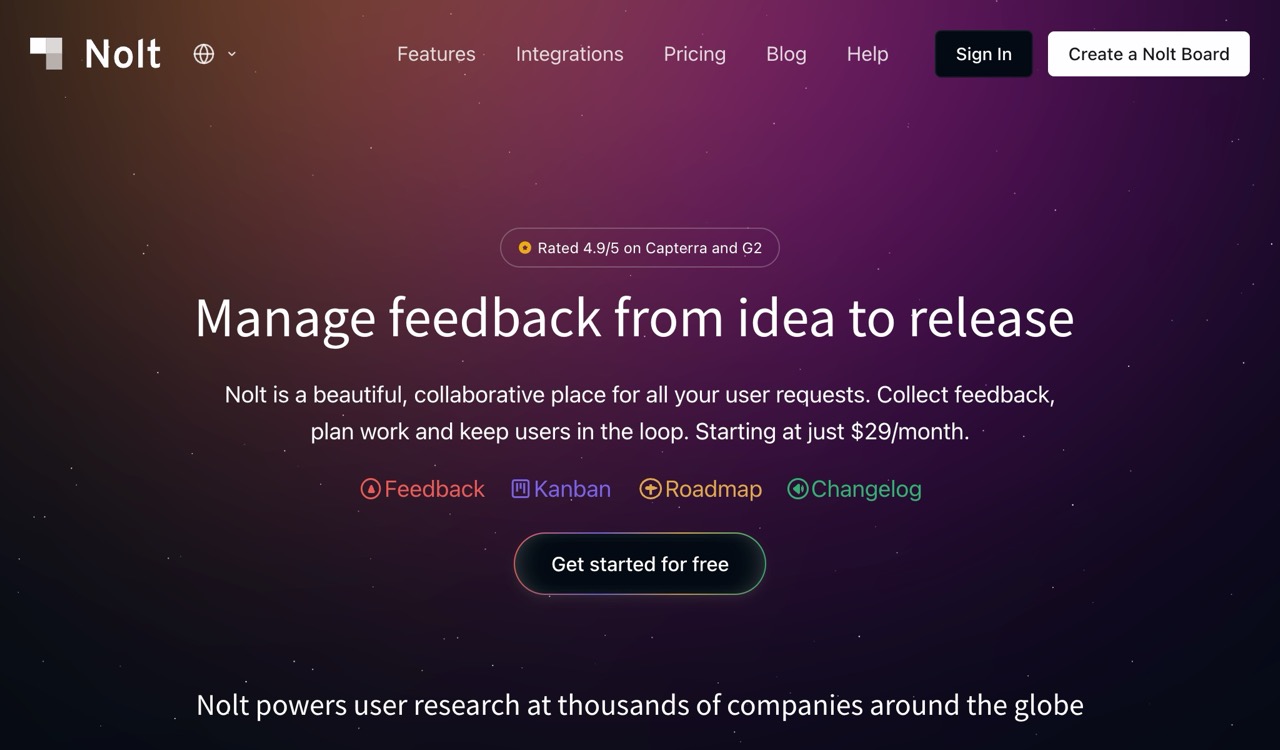
focuses on doing one thing extremely well: collecting feature requests and votes.
Its interface is one of the cleanest in the category.
Key Features
- Feedback board
- Voting
- Roadmap
- Public discussions
Advantages
- Extremely simple
- Fast setup
- Easy adoption
Disadvantages
- Limited feature depth
- Few advanced workflows
- No comprehensive changelog functionality in lower tiers
Compared with Suggix
Nolt is simpler.
Suggix provides a more complete feedback management workflow, including collaboration and prioritization tools.
6. Upvoty
Best for: Affordable Feedback Boards
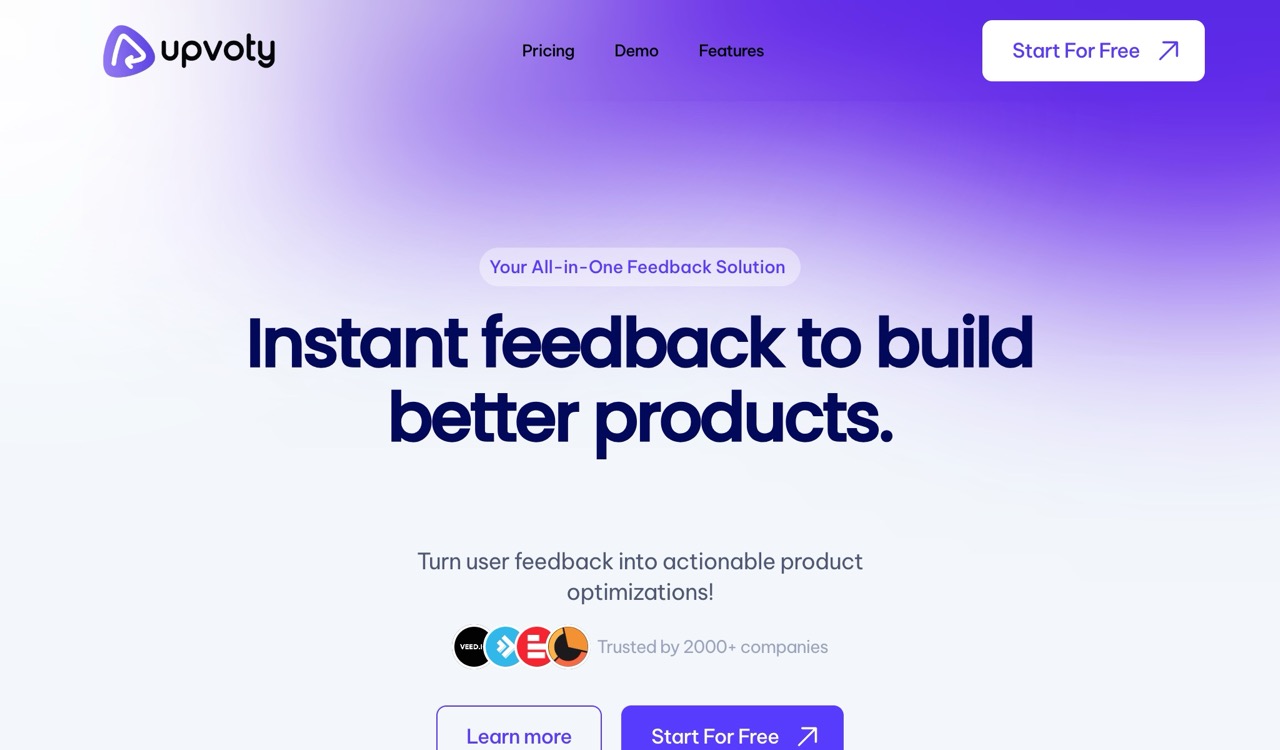
has positioned itself as a budget-friendly alternative to larger feedback platforms.
Key Features
- Unlimited users
- Feedback boards
- Product roadmap
- Integrations
- Custom domains
Advantages
- Low starting price
- Unlimited users
- Easy onboarding
Disadvantages
- Limited analytics
- Less advanced prioritization
Pricing starts at $15/month, making it one of the most affordable options available.
Compared with Suggix
Upvoty is cheaper at entry level.
Suggix offers stronger collaboration and product planning functionality as teams grow.
7. Usersnap
Best for: Visual Feedback and Bug Reporting
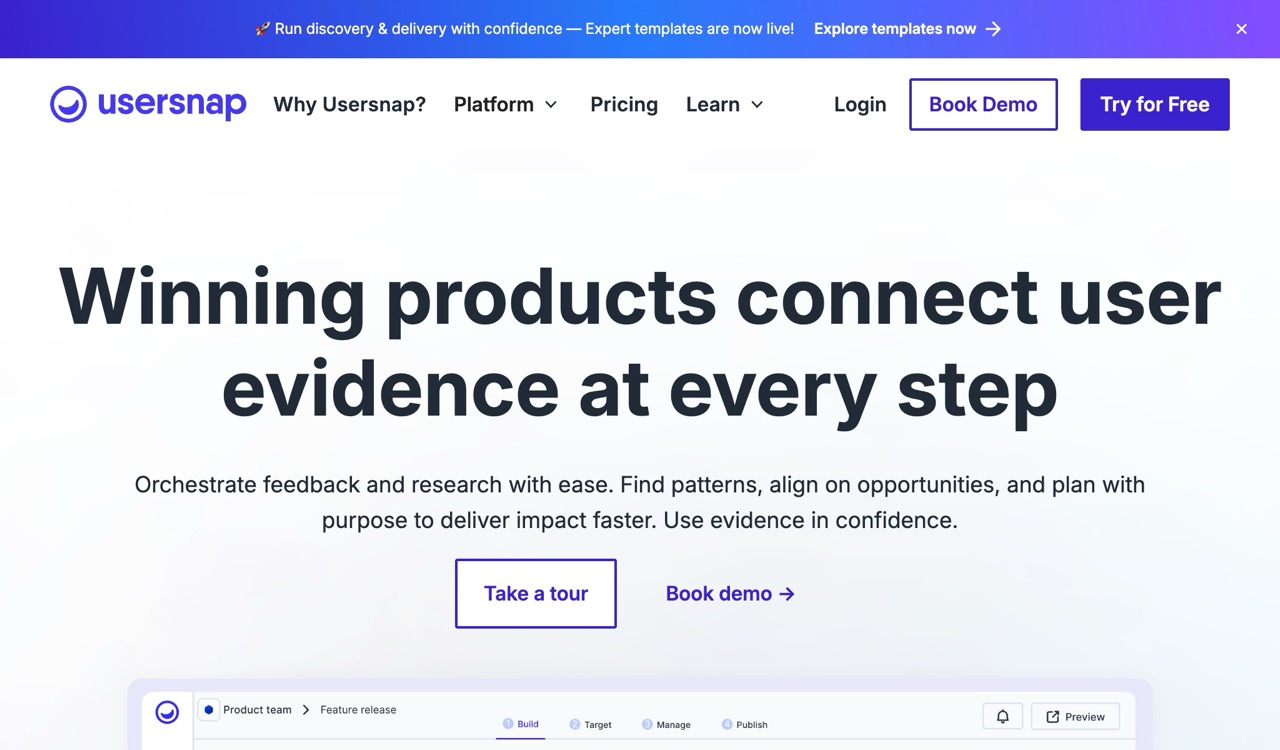
takes a different approach by focusing heavily on visual feedback.
Users can submit screenshots, annotations, and recordings directly from your application.
Key Features
- Screenshot feedback
- Session capture
- Bug reporting
- Surveys
- Feature requests
Advantages
- Excellent for QA teams
- Visual context
- Strong bug reporting workflows
Disadvantages
- Higher pricing
- More focused on support and QA than product strategy
Starter plans begin around $39/month.
Compared with Suggix
Usersnap is superior for bug reporting.
Suggix is better for feature prioritization, voting, and roadmap management.
8. Featurebase
Best for: AI-Powered Feedback Management
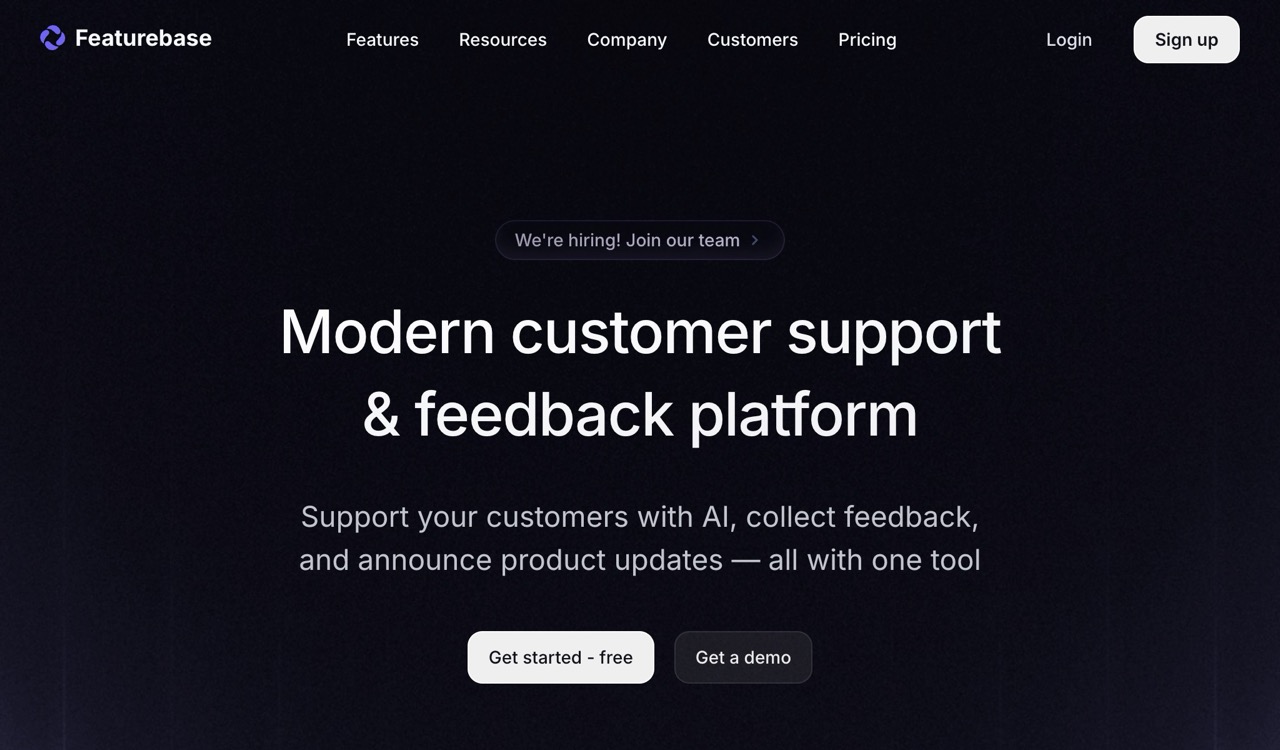
has gained popularity through aggressive product development and AI-assisted workflows.
Key Features
- Feedback boards
- AI duplicate detection
- Roadmaps
- Changelog
- Help center
Advantages
- Rich feature set
- Strong AI capabilities
- Modern design
Disadvantages
- Pricing increases quickly
- Can feel overwhelming for small teams
Compared with Suggix
Featurebase offers more advanced AI features.
Suggix provides a simpler experience and more predictable pricing for small businesses.
Which Feedback Tool Should You Choose?
The right choice depends largely on your stage of growth.
Choose UserJot if:
- You want the best free plan
- You are an indie founder
- Budget is your primary concern
Choose Usersnap if:
- Bug reporting is your main use case
- You need screenshots and recordings
Choose Productboard if:
- You have a dedicated product team
- You need enterprise workflows
Choose Featurebase if:
- AI automation is a priority
- You want an all-in-one platform
Choose Suggix if:
- You are a startup or small SaaS company
- You want predictable pricing
- You need feedback, roadmaps, and changelogs in one place
- You value simplicity over enterprise complexity
Final Thoughts
The feedback management market has changed significantly over the past few years. While enterprise tools such as UserVoice, Canny, and Productboard remain strong options for larger organizations, they often introduce unnecessary complexity and cost for smaller teams.
For most startups and small businesses in 2026, the sweet spot lies in platforms that combine affordability, ease of use, and essential product feedback workflows.
If you’re just getting started, UserJot offers one of the most generous free plans available. If visual bug reporting is your priority, Usersnap is a strong choice. If you need enterprise-grade product management, Productboard remains a leader.
However, for small SaaS companies looking for the best balance of features, simplicity, and predictable pricing, Suggix stands out as one of the strongest options available today.
You can start for free and explore how Suggix helps teams collect feedback, prioritize ideas, publish roadmaps, and close the feedback loop with customers—all from a single platform.
Related Reading
Build what users love, together
Collect feedback, prioritize features, and keep your roadmap aligned with what actually matters.
Get Started — It’s FreeNo credit card required · 14-day free trial · Setup in minutes