

All articles
Building Products / 5 minutes read
How to Collect, Organize, and Track Product Ideas
September 2, 2026
Product ideas pile up fast. They end up scattered across emails, Slack, support tickets, spreadsheets, and customer conversations.
Without a clear system, it's easy to lose track of what customers want, which ideas are worth building, and what's already in progress.
A simple workflow can keep everything organized:
Collect ideas → Organize ideas → Prioritize what matters → Track progress → Communicate releases
In this guide, we'll show you how to manage the entire product idea workflow with Suggix.
1. Collect Product Ideas in One Place
The first step is to make it easy for customers and team members to submit product ideas.
Instead of asking customers to send ideas through email or keeping them in separate spreadsheets, create a centralized feedback portal.
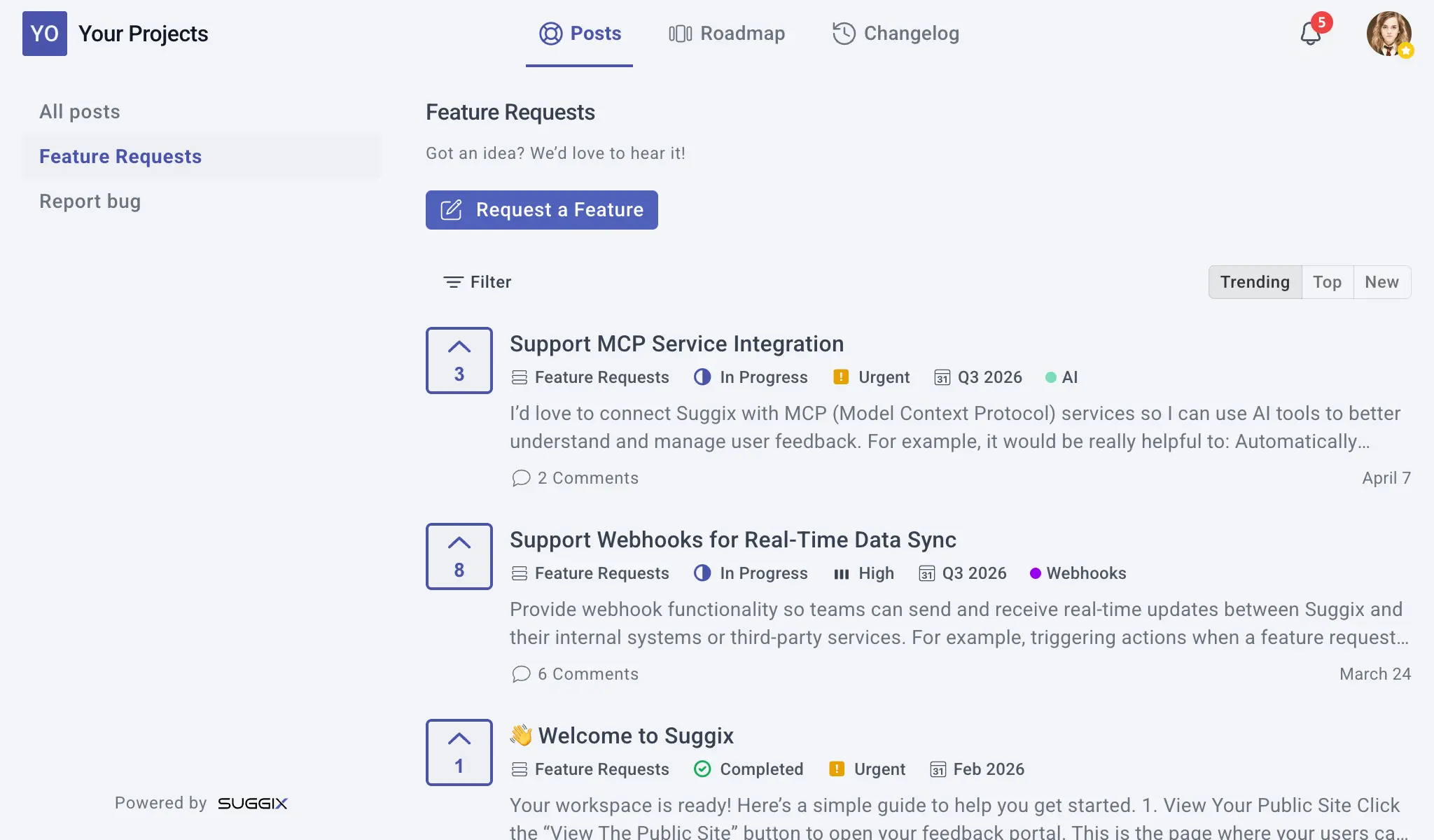
With Suggix, you can create a feedback portal where users can submit their ideas, describe the problem they're trying to solve, and see existing requests.
Create a feedback board
Start by creating a board for collecting product feedback.
You can use a general board such as:
- Feature Requests
- Report bugs
Or create separate boards for different areas of your product.
For example:
- Dashboard
- Integrations
- API
This gives users a clear place to submit their ideas.
Let customers submit ideas
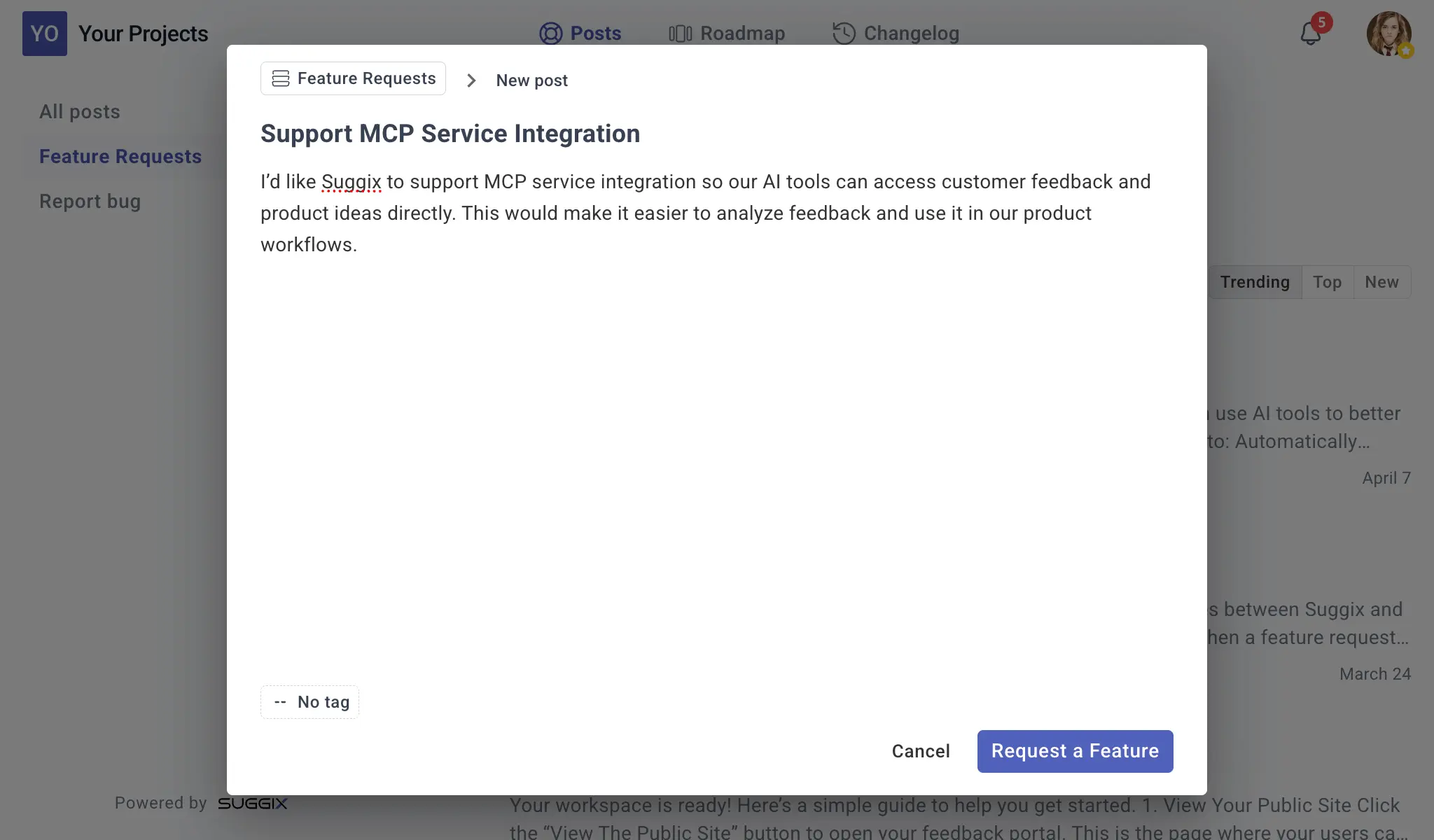
When a customer has an idea, they can create a new feedback post.
A useful product idea should contain more than just a feature name.
Encourage users to explain:
- What problem are they experiencing?
- What are they trying to accomplish?
- Why is the current solution insufficient?
- What would they like to see changed?
2. Organize Product Ideas
As your feedback grows, simply collecting ideas isn't enough. You need a way to organize similar requests, understand demand, and track where each idea stands.
Group Similar Ideas and Measure Demand
Customers may describe the same request in different ways:
- "Add dark mode"
- "I want a dark theme"
- "Please support dark UI"
- "Can you add night mode?"
Instead of treating them as separate requests, let customers find existing ideas, vote on them, and add their own comments.
This helps your team consolidate duplicate requests and get a clearer picture of customer demand.
Suggix uses votes to help you identify which ideas have the strongest support. For example:
Product idea
Votes
Dark mode
87
Slack integration
52
CSV export
34
Custom reports
18
Votes aren't the only factor in deciding what to build, but they provide a useful signal when prioritizing ideas.
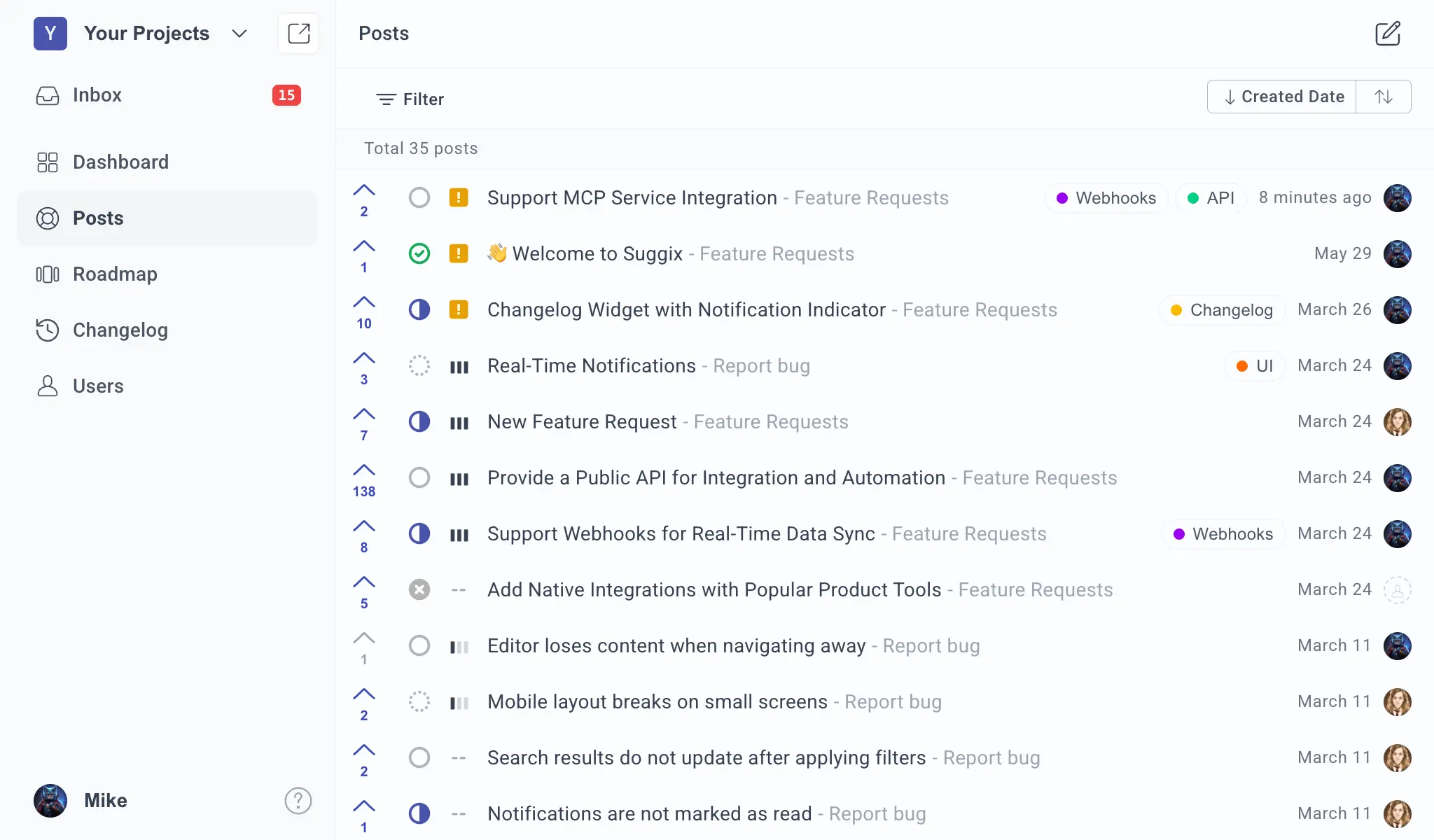
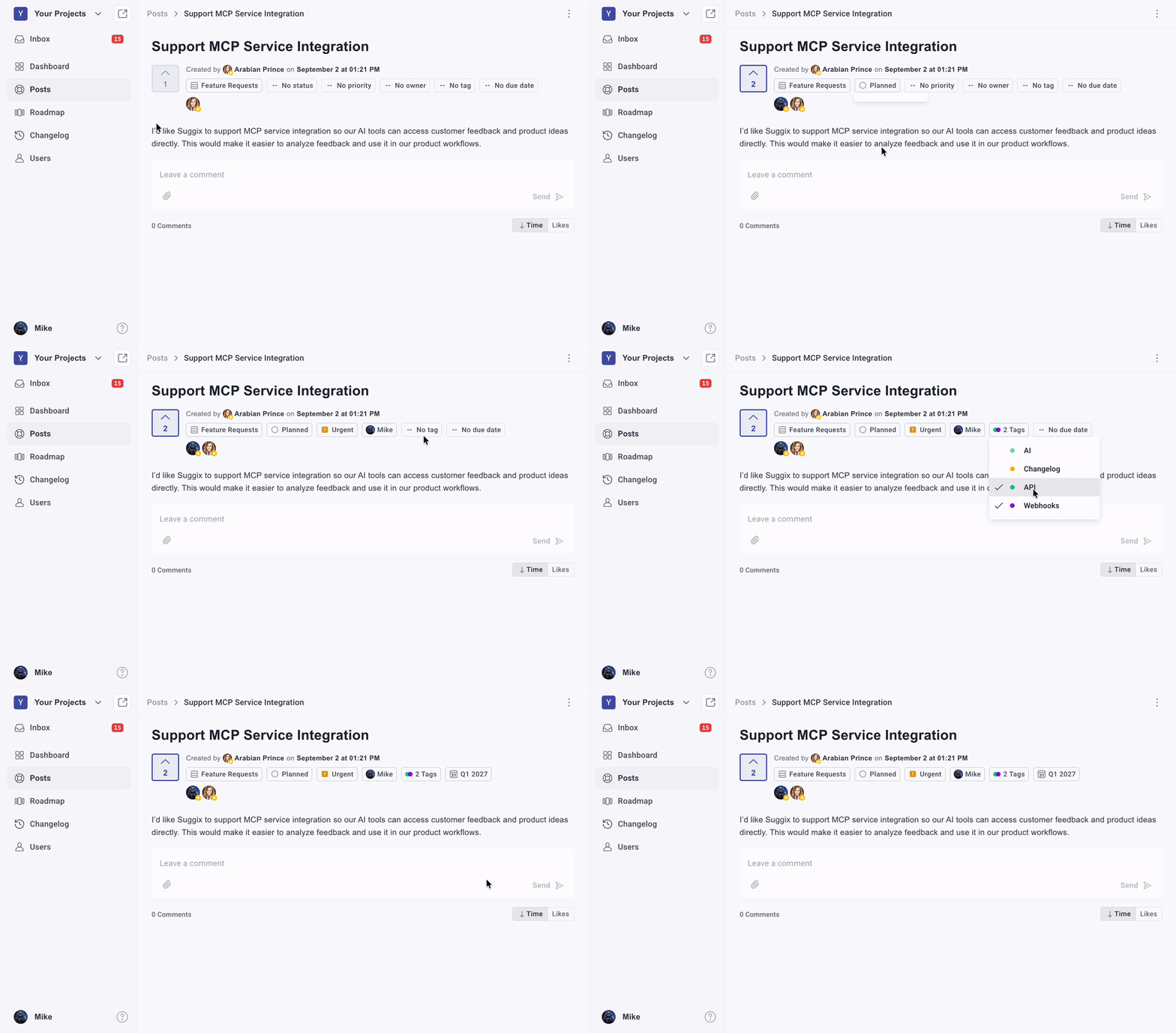
Organize Ideas by Status
Once ideas are consolidated, organize them by their stage in the product development process.
A simple workflow might look like:
New → Backlog → Planned → In Progress → Completed
Each status answers a different question:
- New — Hasn't been reviewed yet.
- Backlog — Has been reviewed and is being considered.
- Planned — Selected for future development.
- In Progress — Currently being built.
- Completed — Released to customers.
You don't need a complicated workflow. Choose the statuses that match your team's process and keep each idea's status up to date.
3. Prioritize What Matters
Collecting hundreds of product ideas doesn't mean you should build hundreds of features. The challenge is deciding which ideas are worth building next.
Customer votes are a useful signal, but they shouldn't be the only factor. When prioritizing an idea, consider:
- Customer demand — How many customers have requested or voted for it?
- Customer importance — Does it solve a significant problem or is it simply nice to have?
- Strategic value — Does it support your product strategy?
- Business impact — Could it improve retention, conversion, or expansion?
- Development effort — How much engineering work will it require?
The goal isn't to create a complicated scoring system. Use customer feedback as a signal, then combine it with product judgment and business priorities.
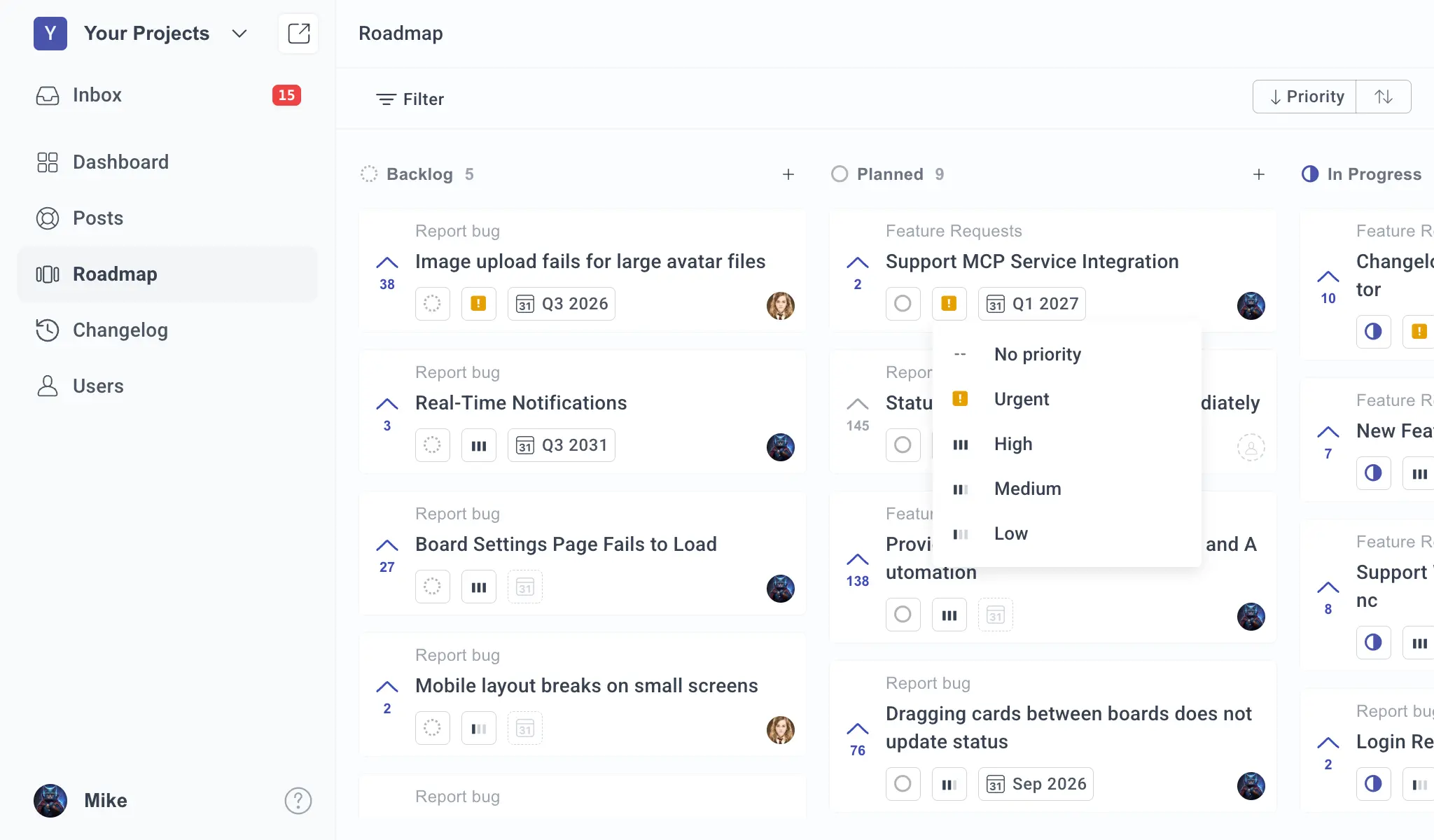
Move Prioritized Ideas to Your Roadmap
Once you've decided which ideas are worth building, move them to your product roadmap.
Suggix connects customer feedback directly with your roadmap, so a validated idea can move from feedback → planned → development without being copied into another tool.
4. Track Product Ideas While They're Being Built
A roadmap shouldn't just be a list of features.
Customers also want to know what is happening with the ideas they requested.
Once a feature enters development, keeping its status updated helps close the feedback loop.
This simple update answers an important customer question:
"What happened to my request?"
Without a tracking system, customers may repeatedly contact your support team asking about the same feature.
With a public roadmap, they can check the current status themselves.
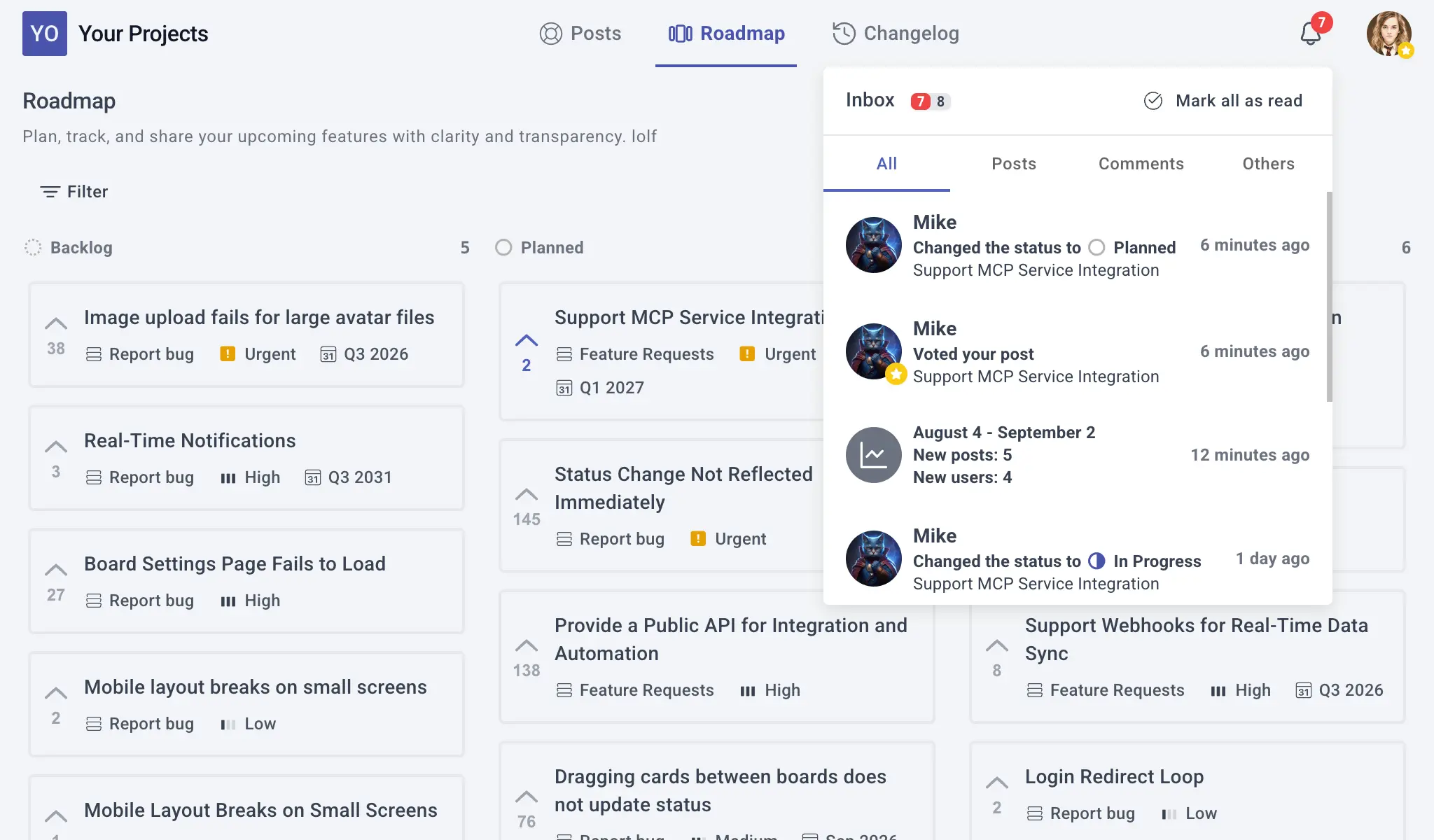
Notify Customers About Progress
The feedback loop becomes even more useful when customers can follow ideas they're interested in.
When a user follows a roadmap item, they can receive notifications when its status changes or progress is updated.
This means customers don't have to repeatedly check the roadmap.
They can submit or vote for an idea, follow its progress, and receive updates when something changes.
5. Close the Feedback Loop With a Changelog
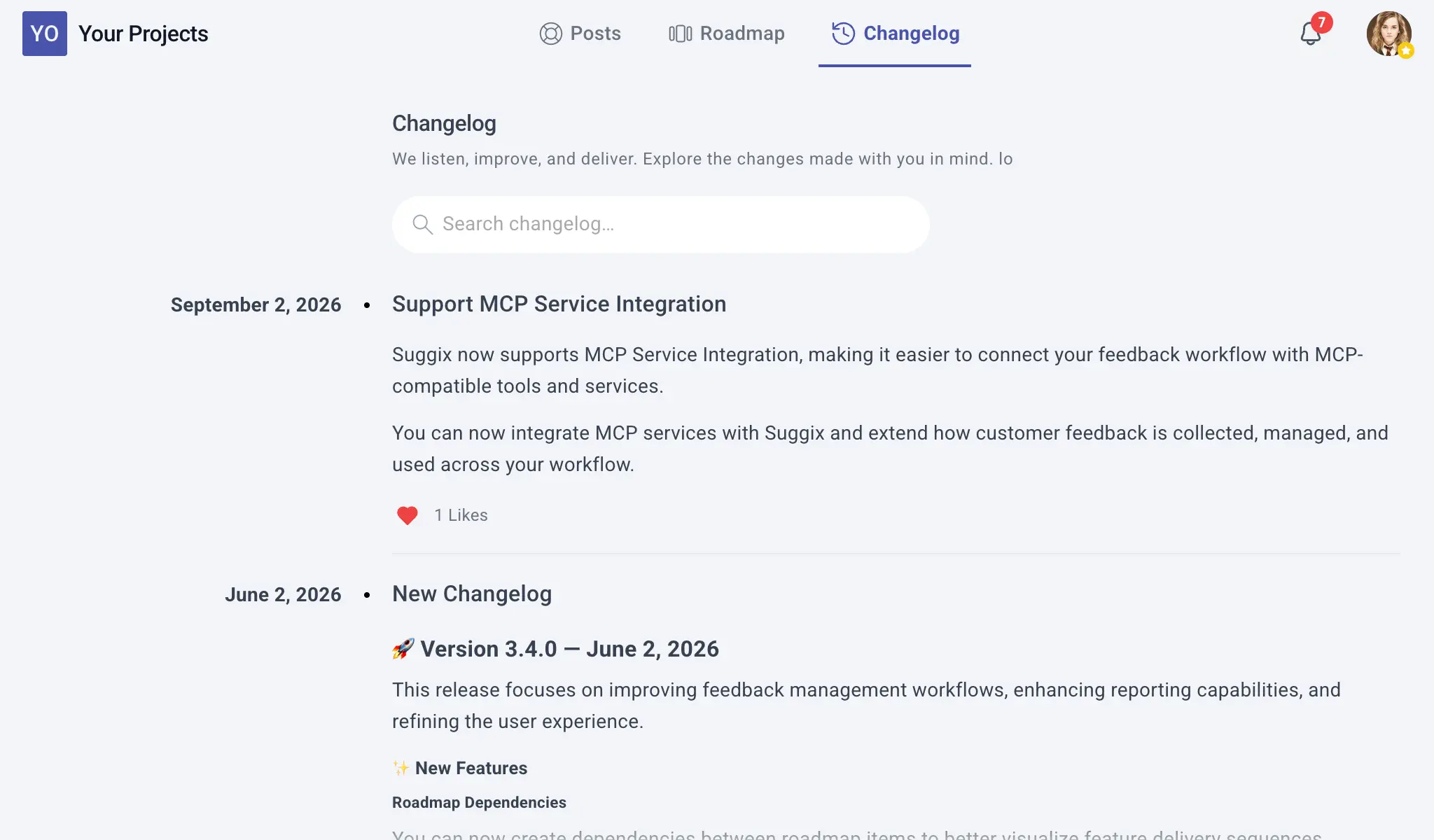
The final step is letting customers know when an idea has actually shipped.
This is where a changelog can complete the workflow.
Instead of collecting feedback and forgetting about it, customers can see how their feedback influences your product.
Start Turning Customer Ideas Into Better Products
Good product ideas don't come from collecting more requests. They come from understanding which problems matter most to your customers and turning that insight into better product decisions.
When customers can share ideas, support the ones they care about, and see what happens next, feedback becomes more than a list of feature requests. It becomes an ongoing conversation between your team and your customers.
Suggix gives you the tools to make that conversation part of your product development process—from the first idea to the final release.
Ready to turn customer feedback into your next product decision? Start with Suggix.
Build what users love, together
Collect feedback, prioritize features, and keep your roadmap aligned with what actually matters.
Get Started — It’s FreeNo credit card required · 14-day free trial · Setup in minutes