

All articles
Building Products / 7 minutes read
What Is Net Promoter Score (NPS)? Definition, Formula, and Examples
June 4, 2026
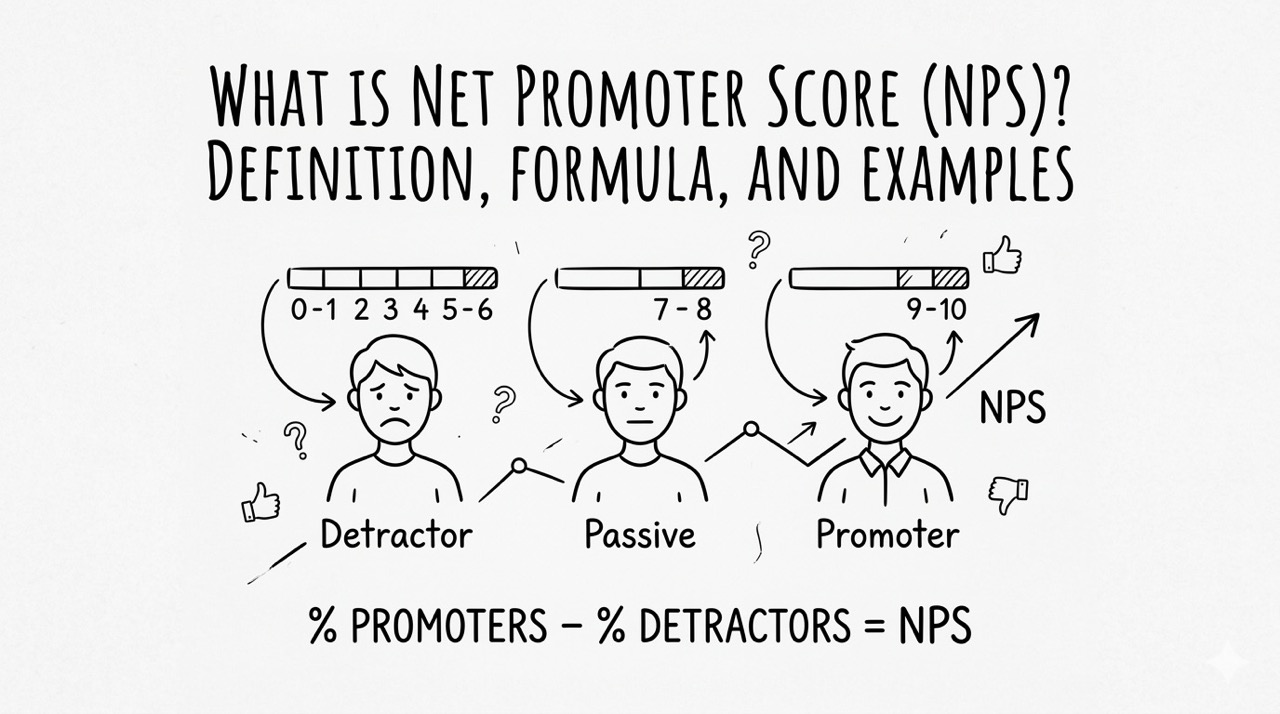
Understand Net Promoter Score (NPS) in minutes. Learn the formula, calculate your NPS with examples, compare industry benchmarks, and discover proven ways to improve customer loyalty.
NPS has become one of the most widely used customer experience metrics in the world. Companies ranging from startups to global enterprises use it to measure customer loyalty, identify dissatisfied users, and uncover opportunities for growth.
In this guide, you’ll learn:
- What Net Promoter Score (NPS) is
- Where NPS originated
- How the NPS formula works
- NPS examples
- How SaaS companies use NPS
- How to improve your NPS score
- Free tools to calculate NPS instantly
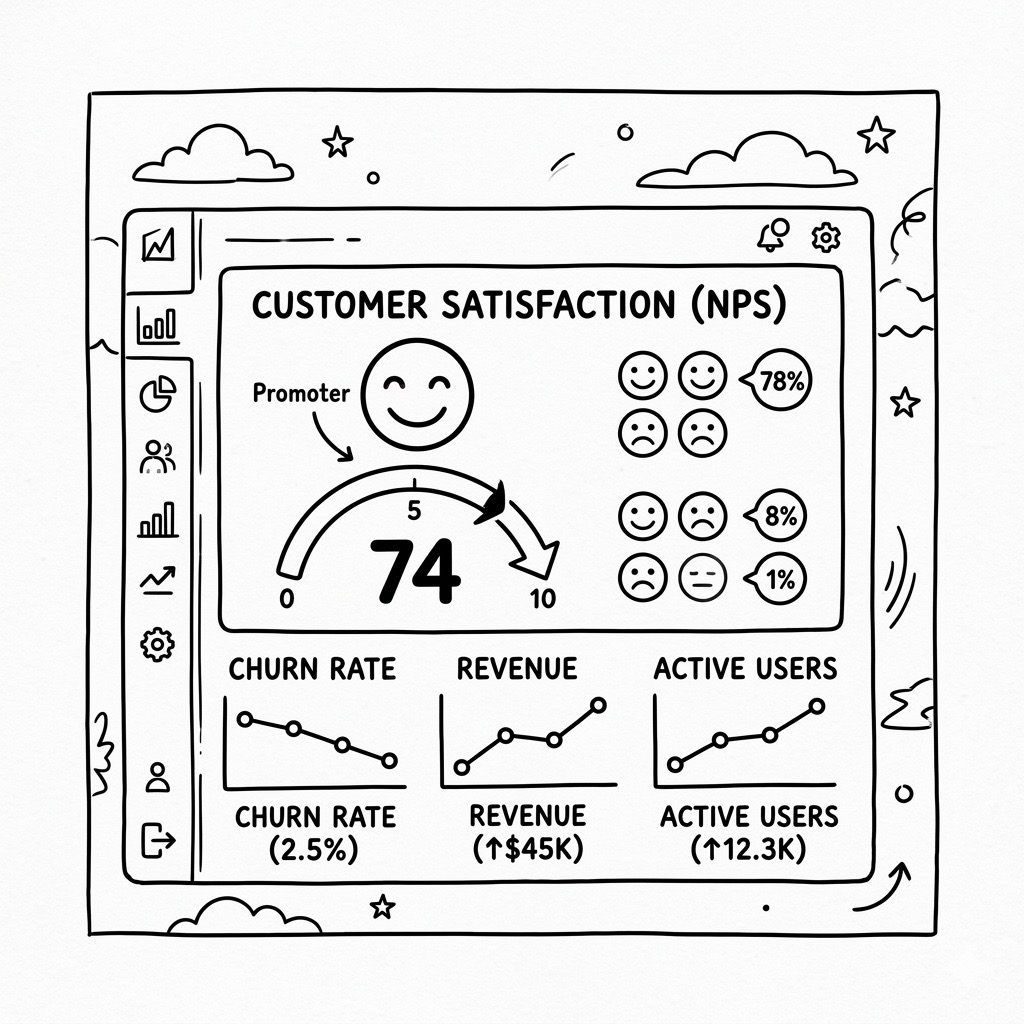
What Is Net Promoter Score (NPS)?
Net Promoter Score (NPS) is a customer loyalty metric that measures how likely customers are to recommend a company, product, or service to others.
The concept was introduced in 2003 by Fred Reichheld in his article “The One Number You Need to Grow” published by Harvard Business Review.
The idea behind NPS is remarkably simple.
Customers are asked a single question:
How likely are you to recommend our product, service, or company to a friend or colleague?
Respondents answer on a scale from 0 to 10.
Their responses are then categorized into three groups:
Score
Category
9-10
Promoters
7-8
Passives
0-6
Detractors
The resulting score provides a quick snapshot of customer loyalty and overall customer sentiment.
Unlike traditional satisfaction surveys that often contain dozens of questions, NPS focuses on one simple question that can be consistently tracked over time.
Why Is NPS Important?
The popularity of NPS comes from its simplicity and predictive value.
Businesses use NPS because it helps answer a critical question:
Are customers enthusiastic enough about your product to recommend it to others?
Customers who actively recommend your product often:
- Stay longer
- Spend more
- Upgrade more frequently
- Generate referrals
- Leave positive reviews
Meanwhile, customers who score your product poorly may be at risk of churn.
By tracking NPS regularly, companies can identify issues before they become major problems.

Understanding Promoters, Passives, and Detractors
To understand NPS, it’s important to know what each customer group represents.
Promoters (Score 9–10)
Promoters are loyal customers who love your product.
They are more likely to:
- Recommend your company
- Become advocates
- Leave positive reviews
- Upgrade to premium plans
Promoters are often responsible for significant organic growth.
Passives (Score 7–8)
Passives are generally satisfied but not enthusiastic.
They may continue using your product but are unlikely to actively recommend it.
Competitors can often attract these customers with better pricing, features, or experiences.
Detractors (Score 0–6)
Detractors are unhappy customers.
They may:
- Leave negative reviews
- Contact support frequently
- Stop using the product
- Warn others against purchasing
Understanding why customers become detractors is often more valuable than the NPS score itself.
The Net Promoter Score Formula
Calculating NPS is straightforward.
The formula is:
NPS = Percentage of Promoters − Percentage of Detractors
For example:
Category
Responses
Promoters
60
Passives
25
Detractors
15
Total responses = 100
Promoter Percentage = 60%
Detractor Percentage = 15%
NPS = 60 − 15
NPS = 45
The final score can range from:
- -100 (every customer is a detractor)
- +100 (every customer is a promoter)
NPS Calculation Example
Imagine a SaaS company sends an NPS survey to 1,000 customers.
The results are:
Score Group
Responses
Promoters
520
Passives
280
Detractors
200
Promoter Percentage:
520 ÷ 1000 = 52%
Detractor Percentage:
200 ÷ 1000 = 20%
NPS:
52 − 20 = 32
The company has an NPS score of 32.
Use Our Free NPS Calculator
If you’re calculating NPS regularly, manual calculations can become time-consuming.
Instead, use our free NPS Calculator:
The calculator instantly computes:
- Net Promoter Score
- Promoter percentage
- Detractor percentage
- Score interpretation
- Actionable recommendations
It’s especially useful for product managers, founders, customer success teams, and marketers who monitor customer satisfaction frequently.
What Is a Good NPS Score?
Many businesses ask:
“What is considered a good NPS?”
The answer depends on your industry, but a common benchmark looks like this:
NPS Score
Interpretation
Below 0
Critical
0-29
Needs Improvement
30-49
Good
50-69
Excellent
70+
World Class
For SaaS companies, an NPS above 30 is generally considered healthy, while scores above 50 often indicate strong customer loyalty.
However, comparing your score against competitors in your specific market is usually more meaningful than chasing an arbitrary benchmark.
How SaaS Companies Use NPS
NPS is particularly valuable in SaaS because customer relationships are ongoing rather than transactional.
A customer does not simply buy a product once. Instead, they continuously decide whether to keep paying for it every month or year.
Because of this, customer sentiment directly impacts:
- Retention
- Expansion revenue
- Churn rate
- Customer Lifetime Value (LTV)
- Word-of-mouth growth

Identifying Churn Risks
Customers who give low NPS scores often show early signs of churn.
A SaaS company can automatically flag detractors for follow-up conversations and support outreach.
This allows teams to resolve issues before customers cancel.
Prioritizing Product Improvements
NPS surveys become significantly more valuable when combined with qualitative feedback.
Many SaaS companies ask a follow-up question:
What is the primary reason for your score?
The responses often reveal:
- Missing features
- UX frustrations
- Performance issues
- Pricing concerns
These insights can guide product roadmaps more effectively than assumptions.
Measuring Product-Market Fit
Many startups use NPS as an indicator of product-market fit.
If customers consistently score your product highly and actively recommend it, that’s often a strong signal that you’re delivering real value.
While NPS alone should never be the sole metric, it can serve as an important leading indicator.
Common Mistakes When Using NPS
Focusing Only on the Score
The score itself is just a number.
The real value comes from understanding why customers gave that score.
Ignoring Detractor Feedback
Detractors often provide the most actionable insights.
Many product improvements originate from complaints and frustrations.
Surveying Too Frequently
Excessive surveys can reduce response rates and frustrate customers.
Most SaaS companies measure NPS quarterly, bi-annually, or at key customer lifecycle stages.
Not Closing the Feedback Loop
Customers appreciate knowing their feedback led to action.
When users see improvements based on their suggestions, loyalty often increases significantly.
How to Improve Your NPS Score
Improving NPS is ultimately about improving customer experience.
Some proven strategies include:
Improve Customer Onboarding
Help users achieve their first success as quickly as possible.
Fix High-Friction Experiences
Analyze common complaints and remove obstacles.
Respond Quickly to Feedback
Customers appreciate businesses that listen.
Deliver Requested Features
When users repeatedly request the same functionality, it often indicates genuine demand.
Close the Loop
Tell customers when their feedback has been implemented.
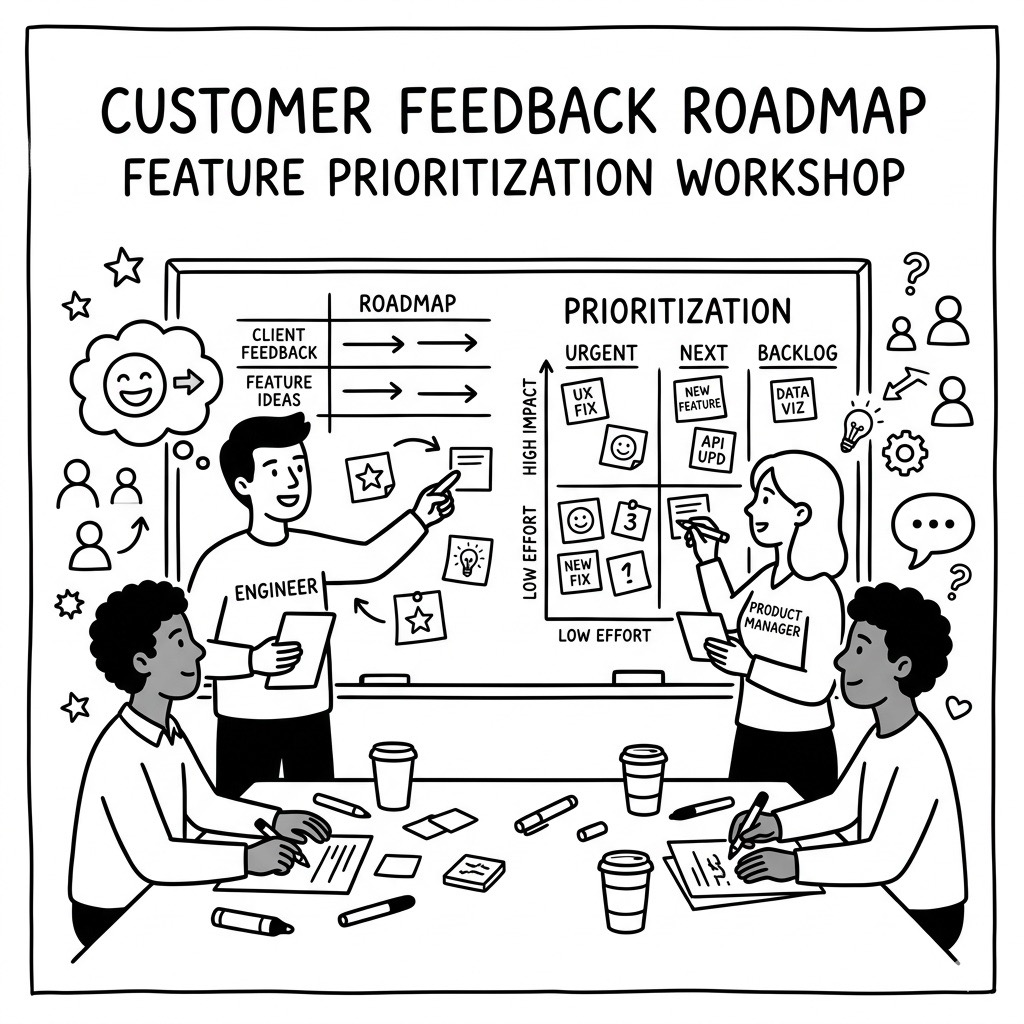
How Suggix Can Help Increase Customer Satisfaction
One of the biggest reasons SaaS companies receive lower NPS scores is that customers feel ignored.
Users submit feedback, request features, and report pain points—but never hear back.
This creates frustration and reduces customer loyalty.
That’s where Suggix can help.
Suggix provides a centralized customer feedback platform that allows teams to:
- Collect feature requests
- Organize customer feedback
- Prioritize improvements
- Share public roadmaps
- Publish changelogs
- Close the feedback loop
When customers can see that their suggestions are being heard and acted upon, satisfaction often improves naturally.
Instead of guessing what customers want, product teams can build based on real user demand.
Over time, this leads to:
- Better customer experiences
- Stronger retention
- Higher engagement
- Improved Net Promoter Scores
Final Thoughts
Net Promoter Score remains one of the simplest and most effective ways to measure customer loyalty.
Its strength lies not only in the score itself but in the conversations and product improvements that follow.
For SaaS companies, NPS can provide early warning signs of churn, uncover feature gaps, and help evaluate customer sentiment at scale.
If you’re measuring NPS today, don’t forget to calculate your results accurately using our free tool:
And if you’re looking for a better way to collect customer feedback, prioritize feature requests, and improve customer satisfaction over time, consider using Suggix as part of your customer feedback workflow.
References
Build what users love, together
Collect feedback, prioritize features, and keep your roadmap aligned with what actually matters.
Get Started — It’s FreeNo credit card required · 14-day free trial · Setup in minutes